
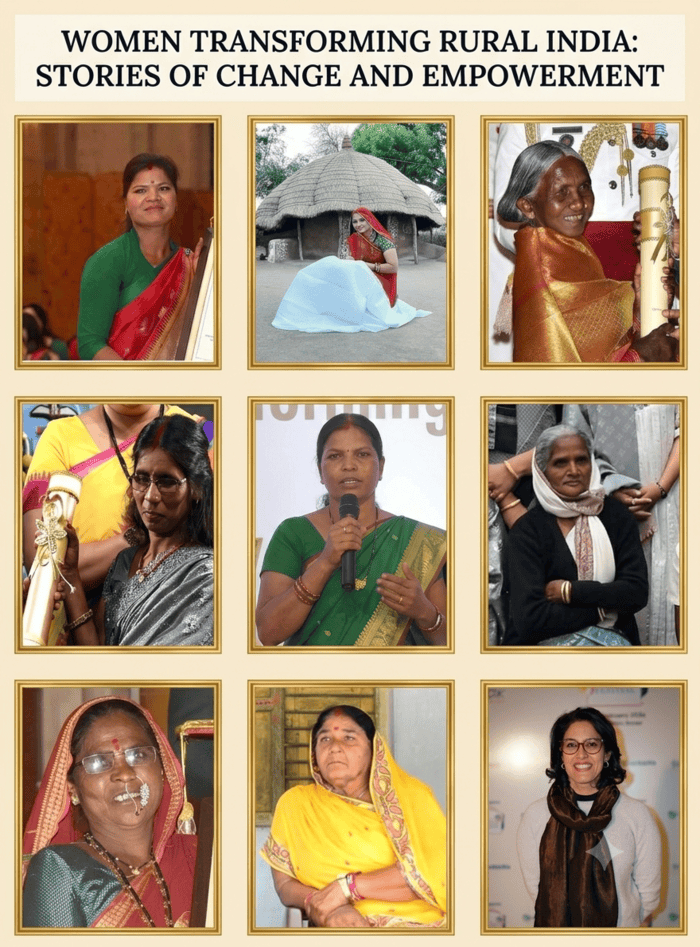
Rural India rarely makes the headlines for the right reasons. But scattered across its villages are women who picked up a fight nobody asked them to fight, for water, for seeds, for a daughter’s right to be born, for a tree left standing, and simply did not stop.
None of them had a corner office or a viral moment to launch them. What they had was proximity to a problem and the stubbornness to solve it anyway.
Here are ten women transforming rural India.
Table of Contents
Top 10 women Transforming Rural India
1. Chhavi Rajawat: The MBA Who Became a Sarpanch

Chhavi Rajawat left a corporate career in telecom to become the sarpanch of Soda, her ancestral village in Rajasthan’s Tonk district, after residents travelled to Jaipur to ask her to take on the role. Elected in 2010 and re-elected in 2015, she is widely described as the only sarpanch in India to hold an MBA and she is the youngest village head of India.
She inherited a village gripped by drought. Her first move was to desilt Soda’s 100-acre reservoir and its smaller ponds to harvest rainwater, work carried out under MGNREGA, which went on to meet the village’s water needs for a full year. Over her two terms, Soda saw pipelines and toilets reach hundreds of households, roads built through the village, a defunct college revived, and a digital literacy centre planned to bring computer access to students who had never touched one.
She was honoured with the Nari Shakti Puraskar and the First Ladies National Award and named a Young Global Leader by the World Economic Forum.
Chhavi Rajawat did not wait for a scheme to arrive. Instead, She built the case for one, one pond at a time.
Read Chavvi Rajawat’s complete story here:
2. Rajkumari Devi: “Kisan Chachi,” the Potato Queen of Bihar
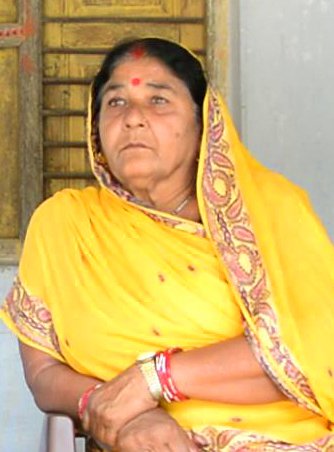
Rajkumari Devi, from Anandpur village in Muzaffarpur, Bihar, is popularly known as Kisan Chachi, “Farmer Aunt.” Married young to a poor family, she turned to farming and organised women into self-help groups, using biological and organic methods to create work for families who had none.
She became known as Bihar’s “Potato Queen” for modernising potato cultivation in a sector long dominated by men, adopting better seed and fertiliser practices that lifted her own yields and set a new standard in the region, later extending her methods to other crops. She was honoured with the state’s Kisan Shri award and, in 2019, with the Padma Shri, one of India’s highest civilian honours.
At 73, Rajkumari Devi is not just a farmer but a trailblazer and inspiration for many women who want to become self-reliant, embrace agriculture as a source of livelihood, and build a better future for themselves and their communities.
She rode a bicycle from field to field before anyone was calling it grassroots leadership. It just was.
Read Rajkumari Devi’s complete story here:
3. Varsha Deshpande: Fighting for the Girl Child
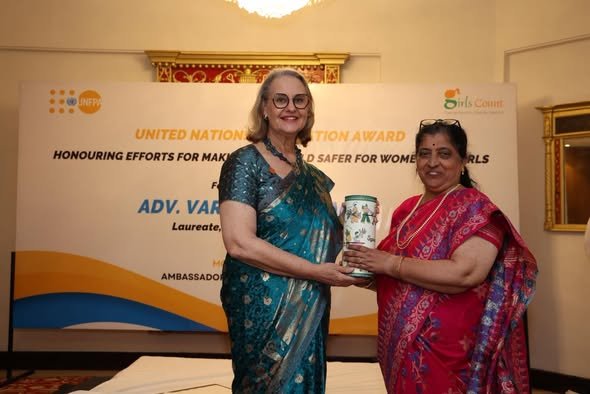
A lawyer by training, Varsha Deshpande founded the Dalit Mahila Vikas Mandal in Satara, Maharashtra, in 1990 to work on gender justice for marginalised women. Her most defining fight has been against female foeticide, through Lek Ladki Abhiyan, launched in 2004, she and her team have run decoy operations, using pregnant volunteers, to catch doctors and clinics conducting illegal sex-selective abortions, resulting in convictions across the state.
Her advocacy also helped shape the stricter 2002 amendment to India’s law banning prenatal sex determination, and she continues to sit on the national committee overseeing that law. In 2025, she became only the third Indian to receive the United Nations Population Award for her contribution to gender equality.
Where the law had loopholes, she went looking for the doctors slipping through them.
4. Rahibai Soma Popere: India’s “Seed Mother”
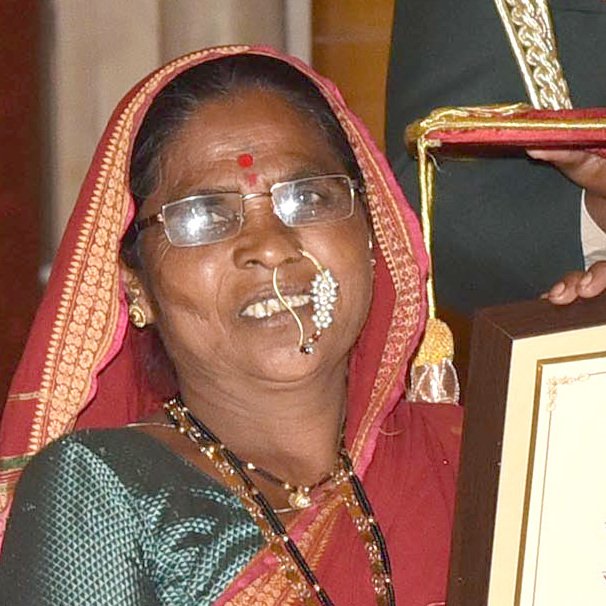
Rahibai Soma Popere, from a tribal farming family in Kombhalne village, Ahmednagar district, Maharashtra, has spent decades conserving native seed varieties threatened by the spread of hybrid, market-dependent agriculture. With no formal education, she built her work on traditional knowledge, saving seed after every harvest, exchanging it within her community, and reviving crop varieties on the verge of disappearing.
Through community seed banks, she has helped farmers access indigenous seed at little or no cost, protecting both biodiversity and the food security of her region. Her work earned her the Padma Shri in 2020 and the nickname “Beej Mata” : Seed Mother.
She never called it activism. She called it not losing what her grandmother grew.
5. Kamala Pujari : Preserver of Odisha’s Paddy
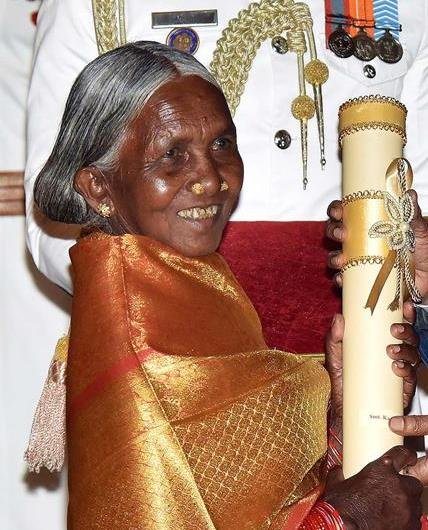
Kamala Pujari, a tribal farmer from Patraput village in Koraput district, Odisha, spent her life preserving hundreds of indigenous paddy varieties, including Kalajeera, Tili, Machakanta, and Ghantia, working with the M.S. Swaminathan Research Foundation from the mid-1990s. Her efforts contributed to Koraput being declared a Globally Important Agricultural Heritage Site by the UN’s Food and Agriculture Organization in 2012.
She won the international Equator Initiative Award in 2002, served on Odisha’s State Planning Board, and received the Padma Shri in 2019, two years before her death in 2024.
She kept rare grains alive in her own fields long before anyone put a name to biodiversity loss.
6. Bina Devi: “Mushroom Mahila” of Munger
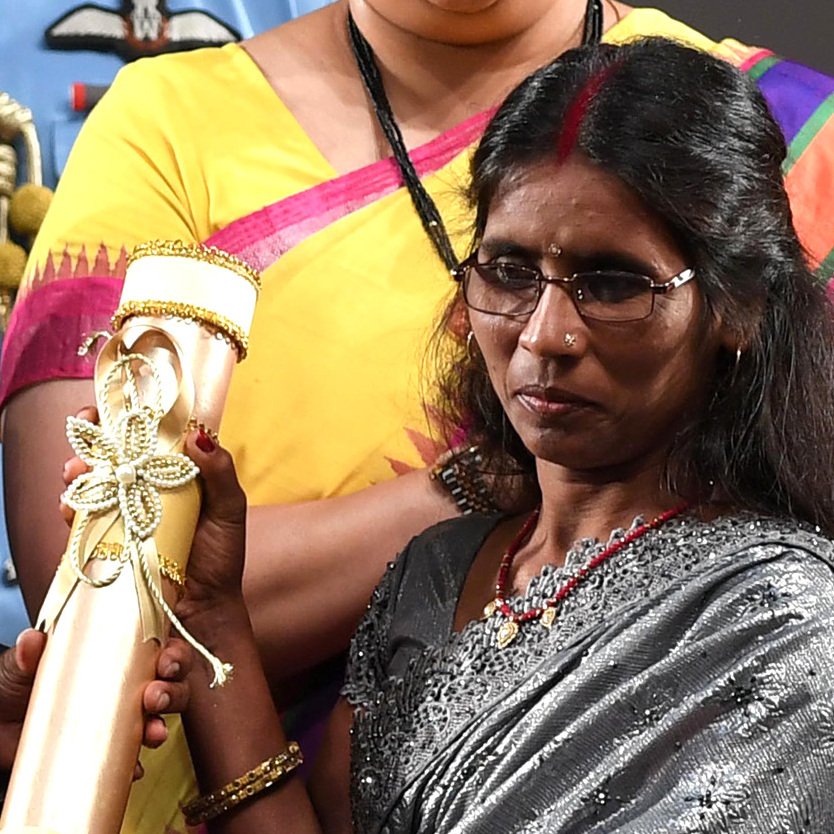
Bina Devi, from Tilkari village in Munger district, Bihar, became known as “Mushroom Mahila” for popularising mushroom cultivation as a livelihood for rural women. She served as sarpanch of Dhauri Panchayat for five years and trained women across five blocks and over a hundred villages in mushroom farming, organic farming, vermicomposting, and organic pesticide preparation, reaching over a thousand women directly.
She also worked to spread digital literacy, training hundreds of women to use mobile phones. She received the Nari Shakti Puraskar in 2019.
She turned a fungus into a business plan for a hundred villages.
7. Ruma Devi: Reviving the Thar’s Craft Economy
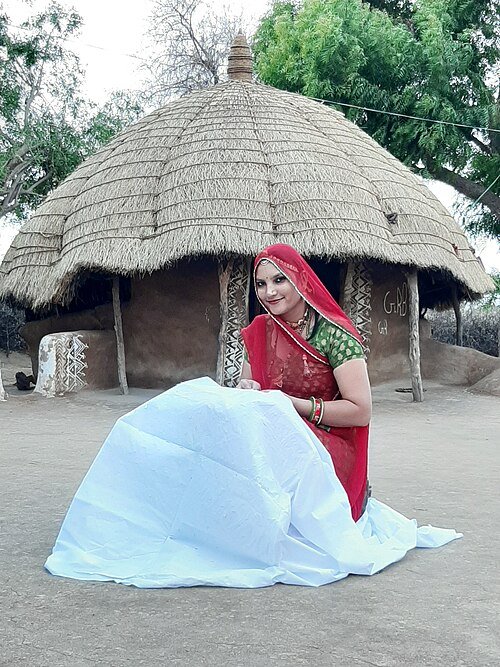
Dr. Ruma Devi, from Rawatsar in Barmer district, Rajasthan, leads the Gramin Vikas Evam Chetna Sansthan, an organisation working on rural livelihoods and craft revival across the Thar Desert region. She has trained and supported an estimated 50,000 women artisans, helping traditional embroidery and handicraft skills translate into sustainable income.
She serves as brand ambassador for Rajasthan’s state livelihoods mission, has spoken at institutions including Harvard University on rural entrepreneurship, and received the Nari Shakti Puraskar in 2018 along with an honorary doctorate.
She looked at a needle and thread and saw an economy nobody had built yet.
8. Kalavati Devi: The Mason Who Ended Open Defecation, One Toilet at a Time
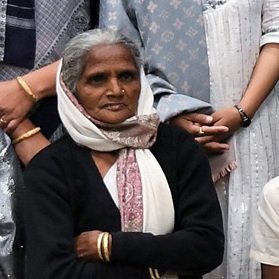
Kalavati Devi, from Sitapur, Uttar Pradesh, married at 14 into a village near Kanpur that had no toilets. She trained as a mason, a trade almost entirely closed to women, and built one for her own home before going on to construct more than 4,000 toilets across villages in and around Kanpur, going door to door to make the case for sanitation.
Her work earned her the Nari Shakti Puraskar in 2019, presented by the President of India.
She picked up a trowel because no one else in the village would.
9. Sunita Devi: Jharkhand’s “Rani Mistri”
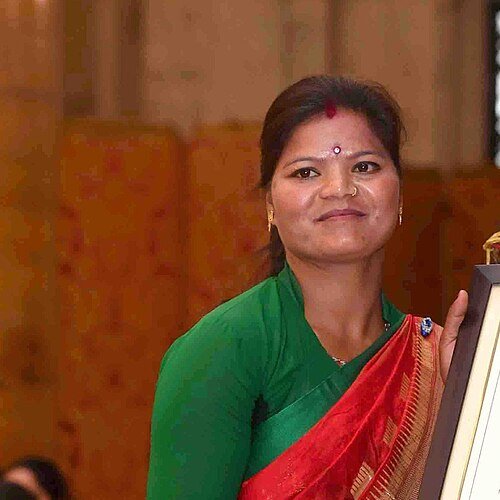
Sunita Devi moved to Udaypura village, Jharkhand, after her marriage in 2010 and found her new home had no working toilet and that ninety percent of women in the village were in the same position. With her husband’s support, she trained as a mason, a role villagers considered beneath the profession, and became known as a “Rani Mistri,” a lady mason, building toilets for households across her village.
She faced resistance from those who objected to a woman doing the work, even as they did not object to women having nowhere private to go. She received the Nari Shakti Puraskar in 2019.
The objection was never really about the toilet.
10. Jamuna Tudu: “Lady Tarzan” of Jharkhand’s Forests
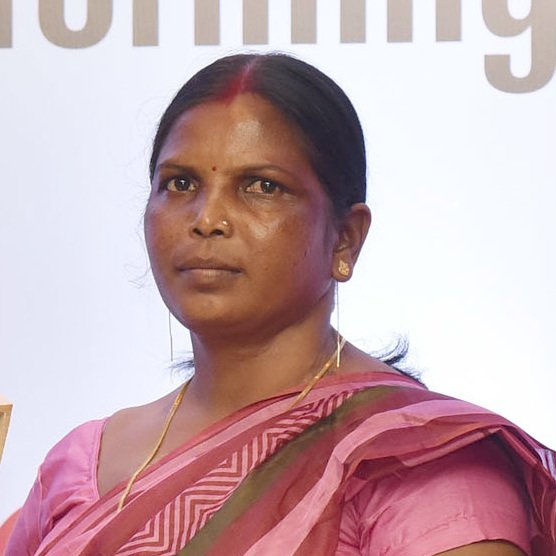
Jamuna Tudu moved to her husband’s village in Jharkhand after her marriage in 1998 and was struck, while gathering firewood, by how fast the surrounding forest was disappearing to timber mafias. She organised a small group of women into what became the Van Suraksha Samiti a forest protection group that now has dozens of active members patrolling the forest in shifts, at times facing armed threats from loggers.
Over more than two decades, her work has helped save an estimated 50 hectares of forest and inspired a local custom of planting trees to mark births and weddings. She received the Godfrey Phillips Bravery Award, the Women Transforming India Award, and the Padma Shri in 2019 and is known nationwide as “Lady Tarzan.”
She went into the forest to collect firewood and came out with a movement.
What Ties Them Together
None of these women set out to become case studies. A drought, a missing toilet, a disappearing seed, a felled tree, and an unsafe clinic, each one responded to the problem directly in front of her with whatever she had.
If you’re rebuilding a career or a life after a gap of your own, the scale of what you start with was never the point. Rajkumari Devi started with a bicycle. Kalavati Devi started with a trowel. What moved things forward was staying with the problem past the point it would have been easier to walk away.
References:
- londonspeakerbureau.com : Chhavi Rajawat profile
- thebetterindia.com : Chhavi Rajawat, Soda village water and infrastructure work
- ispp.org.in : Chhavi Rajawat’s public policy drive in Soda
- en.wikipedia.org/wiki/Chhavi_Rajawat
- en.wikipedia.org/wiki/Kisan_Chachi
- indianpotato.com : Potato Queen of Bihar, Rajkumari Devi
- en.wikipedia.org/wiki/Varsha_Deshpande
- india.un.org : Varsha Deshpande, 2025 UN Population Award
- cnn.com : Varsha Deshpande, decoy operations against sex-selective abortion
- organiser.org : Rahibai Soma Popere, Seed Mother
- en.wikipedia.org/wiki/Kamala_Pujari
- yourstory.com : Kamala Pujari, preserver of paddy seeds
- en.wikipedia.org/wiki/Bina_Devi
- outlookindia.com : Nari Shakti Puraskar awardees 2019
- en.wikipedia.org/wiki/Ruma_Devi
- en.wikipedia.org/wiki/Kalavati_Devi
- en.wikipedia.org/wiki/Sunita_Devi_(mason)
- en.wikipedia.org/wiki/Jamuna_Tudu
- india.un.org : Jamuna Tudu, “Maturkham’s Lady Tarzan”