
From an unlettered farmer’s hut in the hills of Ahmednagar, a woman built a living vault of seeds, and quietly taught a country what wealth without a bank account looks like.
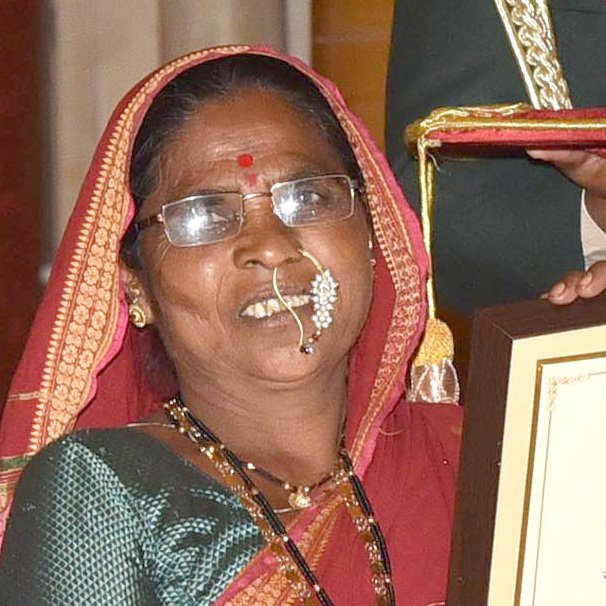
She never sat in a classroom. She never learned to read a seed packet’s fine print. And yet, Rahibai Soma Popere can look at a handful of grain and tell you its history — where it grows best, what it survives, what it gives back to the soil that fed it.
Born in 1964 into a Mahadeo Koli tribal farming family in Kombhalne, a remote village in Maharashtra’s Ahmednagar district, Rahibai never had the option of school. What she had instead was land, hunger, and an unusual kind of attention, the kind that notices what everyone else has stopped seeing. Decades later, that attention would earn her a name few farmers ever hear applied to themselves: “Seed Mother,” an epithet given to her by scientist Raghunath Mashelkar. Wikipedia
This is the story of how a woman with no formal education became one of India’s most trusted voices on what’s disappearing from its fields, and why that should matter to anyone whose plate has a grain of rice on it.
QUICK FACTS
| Detail | Information |
|---|---|
| Name | Rahibai Soma Popere |
| Also Known As | Seed Mother / Beej Mata |
| Profession | Farmer, agro-biodiversity conservationist |
| Organisation | Founder, Kalsubai Parisar Biyanee Samvardhan Samiti; associated with BAIF Development Research Foundation |
| Known For | Conserving indigenous seed varieties threatened by hybrid crops |
| Major Award | Padma Shri (2020); Nari Shakti Puraskar (2019); BBC 100 Women (2018) |
| Based In | Kombhalne village, Akole taluka, Ahmednagar district, Maharashtra |
Table of Contents
HER EARLY LIFE
Rahibai’s family was among the poorest in Kombhalne. Unable to attend school, she began agricultural labour and cow-rearing as a child to help support her seven-member household, which farmed when the monsoon allowed and migrated to work as sugar-factory labourers the rest of the year. At seventeen, she married Soma Popere, who was equally uneducated. There was no formal training in her future, only fields, seasons, and the slow accumulation of what farmers call anubhav: lived knowledge.
It was this knowledge, built without a single textbook, that would later be cited by agricultural scientists and studied at state universities.
Do you find Rahibai’s story inspiring, check our post highlighting 10 women transforming rural India.
HER ACHIEVEMENTS
Rahibai’s body of work reads like something built by an institution, not one woman from one hamlet:
- She has helped conserve dozens of native crop varieties, commonly cited figures include 15 varieties of rice, nine varieties of pigeon pea, and sixty varieties of vegetables, alongside numerous oilseeds with later counts from her seed bank running into the hundreds of varieties across dozens of crops.
- Five hyacinth bean varieties she conserved were taken up for morphological and yield-trait evaluation at Mahatma Phule Krishi Vidyapeeth in Rahuri, a rare instance of a formal agricultural university studying seeds preserved entirely outside its own system.
- She is trained in the four-step paddy cultivation method, and farmers who adopted her improved practices have seen yields rise by as much as 30 percent.
- In 2018, she was named to the BBC’s list of “100 Women,” one of only three Indians on it that year.
- In 2019, the Government of India honoured her with the Nari Shakti Puraskar, one of the country’s highest civilian awards for women.
- In 2020, she was conferred the Padma Shri, India’s fourth-highest civilian award for her contribution to agriculture; the award was formally presented by President Ram Nath Kovind in November 2021.
- Her story travelled further than most: a short film on her anti-hybrid seed campaign won third place in the international section of Nespresso Talents 2019, screened at the 72nd Cannes Film Festival.
HER CONTRIBUTIONS
Awards mark a moment. Rahibai Soma Popere’s real contribution is the system she built, seed by seed.
She started because people were falling sick. She noticed villagers falling sick frequently after eating food prepared from hybrid crops, and began to suspect what science would later confirm that indigenous varieties carried far more nutritional value than the hybrids replacing them.
She organised, rather than worked alone. She began collecting local seeds with the help of other women farmers from Akole taluka and founded a self-help group, Kalsubai Parisar Biyanee Samvardhan Samiti, dedicated entirely to native seed conservation. She also leads a second collective, Chemdeobaba Mahila Bachat Gat, which runs health camps and solar-lamp distribution alongside its agricultural work.
She built a seed bank that runs on trust, not currency. Farmers can borrow seeds from her community seed bank on one condition, they return double the quantity after harvest. No paperwork, no interest, no middlemen. It’s a lending model older than most banks, and it has quietly kept dozens of native crop lines alive and circulating.
She became a teacher without ever being taught. She now travels across Maharashtra training farmers and students in seed selection, soil fertility, kitchen gardening, backyard poultry, and pest management, subjects she mastered entirely through field experience.
She works within the system, not against it. She is associated with the BAIF Development Research Foundation and has shared platforms with established institutions and figures, including a program with social activist Anna Hazare at Ralegan Siddhi, proof that grassroots knowledge and formal agricultural science don’t have to sit on opposite sides of the table.
THE CHALLENGES SHE FACED
None of this came easily, and it didn’t come from a place of comfort.
Rahibai Soma Popere grew up in genuine poverty, in a family that survived on seasonal migration for wage labour. She had no education to fall back on, no institutional voice to lend her credibility in her early years, and no financial safety net while she experimented with conservation work that offered no guaranteed return.
Closer to home, the resistance was personal. In the early years, she endured criticism and conflict within her own family, and the very training trips meant to build her skills often deepened tensions at home. For a woman in a conservative, rural tribal household, stepping outside the home to attend training or speak at a farmer’s meeting was not seen as ambition. It was seen as defiance.
And even after national recognition, the financial reality for a small farmer doesn’t simply change. Popere herself has said that the awards have done little to change her financial situation, even years after the Padma Shri.
HOW SHE OVERCAME THEM
Rahibai Soma Popere didn’t overcome her circumstances with a single turning point. She wore them down with repetition.
She kept working the same land, the same seeds, the same small trades of “borrow one, return two,” long after it was clear no one was going to hand her a shortcut. Recognition came from institutions like Krishi Vigyan Kendra and the Akole Taluk Patrakar Sangh only after years of visible, repeatable results, not the other way around.
At home, she didn’t frame her work as rebellion; she framed it as necessity, tied directly to her family and community’s health and food security. That framing, care disguised as conservation, made it harder to dismiss, even by those most resistant to her stepping outside traditional roles.
Perhaps most tellingly, she never treated the awards as the finish line. Her own words capture this plainly: “I worked hard before, and I continue to work hard now.” The seed bank, the training sessions, the travel, all of it continued, Padma Shri or not.
WHAT WE CAN LEARN FROM HER
Rahibai Soma Popere’s story doesn’t need a moral bolted onto the end of it. But a few things sit quietly inside it, for anyone willing to notice them.
She built an entire body of expertise without a single certificate to show for it, a reminder that knowledge gathered through years of direct experience is not a lesser kind of knowledge. It’s simply a different route to the same authority.
She also didn’t wait for permission or institutional backing before she started. The seed bank began as one woman and a handful of neighbours pooling what they had. The scale came later, and it came because the work was already real.
And there’s something in how she measured success, not by the awards on her shelf, but by whether the seeds kept moving from hand to hand, season after season. For anyone rebuilding something, a career, a skill, a sense of direction — after time away or without the “right” starting point, that’s a quiet, useful way to keep score: not by recognition, but by whether the thing you built is still working, still circulating, still feeding someone.
References
- Village Square — “Maharashtra Seed Mother Pioneers Conservation of Native Varieties” — https://villagesquare.in/maharashtra-seed-mother-pioneers-conservation-native-varieties/
- Wikipedia — “Rahibai Soma Popere” — https://en.wikipedia.org/wiki/Rahibai_Soma_Popere
- She The People — “Who Is Rahibai Soma Popere, Seed Mother Conferred With Padma Shri” — https://www.shethepeople.tv/news/who-is-rahibai-soma-popere-seed-mother-conferred-with-padma-shri/
- Krishi Jagran — “Rahibai Soma Popere: ‘Seed Mother’ Awarded with Padma Shri” — https://krishijagran.com/news/rahibai-soma-popere-seed-mother-awarded-with-padma-shri-know-how-she-ushered-the-farming-revolution/
- The Better India — “‘Seed Mother’ Rahibai’s Story: How She Saved Over 80 Varieties of Native Seeds” — https://www.thebetterindia.com/114951/maharashtra-seed-mother-conservation-native-varieties/
- Good Food Movement — “How Rahibai Popere Built a Seed Bank with a Mother’s Grit and Love” — https://gfm.akshayakalpa.org/read/feature-article/rahibai-soma-popere-seed-mother-beej-mata-padma-shri-ahilyanagar
- ANI via Organiser/aninews — “‘Seed Mother’ Rahibai Soma Popere Honoured with Padma Shri Award” — https://www.aninews.in/news/national/general-news/seed-mother-rahibai-soma-popere-honoured-with-padma-shri-award20211109081836/
- Gulf News — “Woman’s Push to Save Healthy Indigenous Seeds Yields Honours” — https://gulfnews.com/world/asia/india/womans-push-to-save-healthy-indigenous-seeds-yields-honours-1.60836048
- Department of Science and Technology, Government of India — “SEED Mother Rahibai Gets Padmshree” — https://dst.gov.in/sites/default/files/SEED%20Mother%20Rahibai%20gets%20Padmshree.pdf
1. Who is Rahibai Popere, and why is she called the “Seed Mother” (Beej Mata) of India?
Rahibai Soma Popere is a tribal farmer from Kombhalne village in Akole block, Ahmednagar district, Maharashtra. Scientist Raghunath Mashelkar gave her the epithet “Seed Mother”. She began collecting indigenous seeds with other women farmers from Akole taluka after linking the failing health of her community to hybrid crops.
2. How old is Rahibai Popere, and what is her background?
2. How old is Rahibai Popere, and what is her background?
3. Why are native seeds better than hybrid seeds, according to Rahibai Popere?
She argues that native crop varieties resist drought and disease better, are more nutritious, and protect soil fertility because they need fewer chemical fertilisers and less water. The economic point matters too: farmers cannot save hybrid seeds for the next sowing, so they stay dependent on seed companies. Farmers told VillageSquare in 2017 that switching to indigenous seeds and dropping chemical fertilisers could save almost Rs 5,000 a year. That figure is their own estimate, not a study.
How does Rahibai Popere’s community seed bank work?
It runs on borrow-and-return. Community members manage the bank, and farmers who borrow seeds return twice the quantity after harvest. Rahibai says her association with BAIF began in 2014, when they set up a seed bank at her house. A September 2017 report said it distributed 122 varieties of 32 crops. Counts differ between reports, so treat any single figure as a snapshot.
5. Can I get seeds from Rahibai Popere’s seed bank or contact her?
I found no public phone number, email, or sale process for her seed bank. The bank is built around lending seeds within farming communities, not retail sales. Rahibai is associated with the BAIF Development Research Foundation, which supports her work, so BAIF (baif.org.in) is the most credible route for enquiries about seeds, visits, or training. Be cautious of unofficial pages claiming to sell “Rahibai Popere seeds.”
What awards has Rahibai Popere won, and when?
BBC 100 Women, 2018. She was one of three Indians on the list. Wikipedia
Nari Shakti Puraskar, 2019.
Padma Shri. Announced in January 2020, conferred on 8 November 2021 at Rashtrapati Bhavan. Krishi Jagran
Bhadrakali Tararani Puraskar. Presented by Tararani Vidyapeeth, with the felicitation dated 17 January 2023.
A three-minute short film on her anti-hybrid seed campaign also placed third in the international section of Nespresso Talents 2019 at Cannes.
7. What farming methods does Rahibai Popere teach that home growers can try?
She became an expert in the SRI paddy method, participatory seed selection, and organic techniques like vermicomposting, vermiwash, and natural pest repellents. She has also set up nurseries and trained over 3,500 farmers in Ahmednagar district. BAIF found that gardens she supported produced enough to meet a family’s dietary needs for a whole year. The kitchen-garden model is the easiest entry point for beginners