
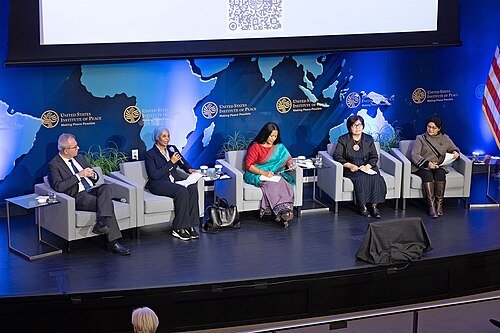
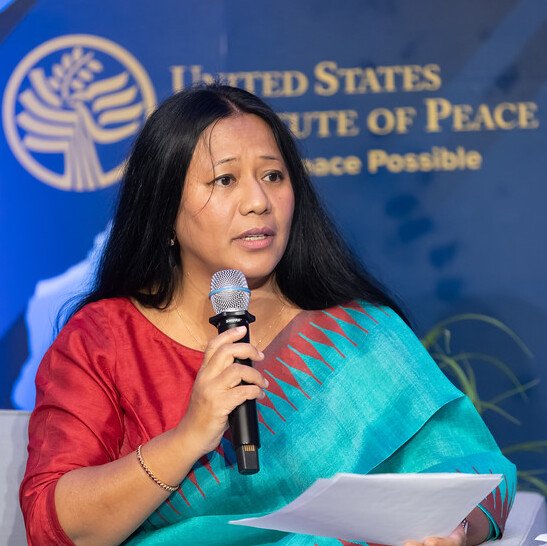
Some women build careers. Some build movements. Binalakshmi Nepram has spent decades building both, while fighting for women affected by gun violence and conflict in Manipur.
Binalakshmi Nepram: Biography, Activism & Work in Manipur
On the night of December 24, 2004, in a village near Imphal, three gunmen dragged a car-battery mechanic named Buddhi Moirangthem out of his workshop and shot him dead. He left behind a young wife, Rebika Akham, with no income and no answers about who had killed her husband or why.
A researcher named Binalakshmi Nepram was in the area that evening, meeting with a group of women activists when the gunfire broke out. In the days that followed, she and a few others raised Rs 4,500 to buy Rebika a sewing machine, enough for her to start earning a living again.
That single act of intervention would, within three years, become a formally registered network supporting thousands of women across a state that most of India rarely thinks about.
Here’s the table matching that exact format:
| Detail | Information |
|---|---|
| Name | Binalakshmi Nepram |
| Also Known As | Bina Nepram, “The Face and Voice of the Northeast” |
| Profession | Arms Control Activist, Writer, Human Rights Defender |
| Organisation | Manipur Women Gun Survivors Network (founded 2007), Control Arms Foundation of India (founded 2004) |
| Known For | Rebuilding lives of women affected by gun violence in Manipur |
| Major Award | Sean MacBride Peace Prize (2010) |
| Based In | Imphal, Manipur (currently in exile) |
Table of Contents
Who She Is
Binalakshmi Nepram is a writer, humanitarian, and human rights defender from Imphal, Manipur. She is often referred to as “The Face and Voice of the Northeast” for her decades of work on women-led disarmament and peacebuilding in India’s northeast.
Her institutional footprint is unusually wide for someone still relatively unknown outside policy and activist circles:
- Founder of the Control Arms Foundation of India (CAFI) in 2004 — India’s first civil society organisation dedicated to conventional arms control
- Founder of the Manipur Women Gun Survivors Network (MWGSN), formally launched on April 26, 2007
- Co-founder of the Global Alliance of Indigenous Peoples, Gender Justice, and Peace
- Initiator of the Northeast India Women Initiative for Peace, launched in 2010 to bring indigenous women into formal peace talks
- A Fellow at the Carr Center for Human Rights Policy, Harvard Kennedy School
- Author or editor of several books, including South Asia’s Fractured Frontier (2002), Meckley: A Historical Fiction on Manipur (2004), Where Are Our Women in Decision Making? (2016), and Deepening Democracy, Diversity, and Women’s Rights in India (2019)
Her recognition includes the Ploughshares Fund Fellowship (2004), the Sean MacBride Peace Prize (2010), the CNN-IBN Real Heroes Award (2011), an Ashoka Fellowship (2011), the L’Oréal Paris Femina Women Award (2015), a place on Forbes’ “24 Young Minds to Watch” list (2015), and the Anna Politkovskaya Award — shared with Nobel laureate Svetlana Alexievich, for courage in reporting from conflict zones. According to her own published biography, she is also the first woman from Manipur and the northeast to have addressed the UN General Assembly.
Your Next Read: Sudha Varghese: The NUn Who is Fighting for Untouchables of Bihar
The Achievement: Building an Institution Around a Single Widow
What makes Binalakshmi Nepram’s work distinctive isn’t just its scale — it’s the model she chose. The MWGSN didn’t hand out one-time relief. It helped survivors open their own bank accounts, gave them interest-free micro-loans instead of grants, and supported them in learning trades like tailoring and weaving so their income wasn’t dependent on charity.
The network also took on a role most support groups wouldn’t touch: helping women file legal complaints when their husbands, sons, or fathers were killed by state or non-state actors, in a region where such cases are rarely investigated.
By the network’s own account, more than 20,000 women affected by gun violence in Manipur have been reached through this work over the past two decades — through livelihood support, legal aid, and psychosocial counselling.
On the policy side, Nepram pushed the conversation upward. Through CAFI, she worked with the Indian government to factor gender insecurity into arms legislation, and she was involved in the international effort that led to the Convention on Cluster Munitions, which banned cluster bombs globally.
Your Next Read: Women Transforming Education in India
The Challenge: A War Most of the Country Doesn’t See
Manipur has lived under the Armed Forces Special Powers Act since 1958, alongside decades of insurgency and a heavy military presence. The conflict has resulted in tens of thousands of deaths and one of the highest disappearance rates in the country — much of it invisible to the rest of India.
For the women left behind, grief rarely came with support. It came with silence, and sometimes with fresh danger for speaking up.
Nepram’s own work eventually put her in that danger. In 2017, a mother approached her after her 19-year-old son was allegedly shot dead by the son of a local politician. When Nepram and a lawyer began pursuing the case, threats followed. According to Ashoka’s published account of her story, armed police personnel entered her home, and she was forced to leave the country for her own safety — continuing her work from exile.
How She Overcame It: Scaling Up, Not Stepping Back
Rather than retreating after 2017, Nepram continued to build the very structures that had made her a target — this time from outside India. She stayed engaged in international arms control forums, continued advocating for India to engage more fully with the global Arms Trade Treaty, and kept the network she’d built running.
Her underlying philosophy, as she has described it in interviews, was formed early: that research alone accomplishes little without direct intervention. That’s why the sewing machine came first, three years before the network had a name or a formal launch date. The institution grew out of a proof of concept, not a plan drawn up in advance.
What We Can Learn From Her Journey
Strip away the scale of it, and Binalakshmi Nepram’s story is really about sequencing: help first, structure later.
She didn’t wait until she had funding, a registered organisation, or a five-year plan before she acted. She spent Rs 4,500 on a sewing machine for one widow. The formal network — the legal aid, the microloans, the international recognition — came after, built on proof that the small thing worked.
For anyone starting over, whether after a career break, a personal setback, or simply not knowing where to begin on something that matters to them, that’s a useful order of operations. The credibility, the scale, and the institution can come later. What has to come first is doing the one small thing in front of you.
References:
- Wikipedia — Binalakshmi Nepram: https://en.wikipedia.org/wiki/Binalakshmi_Nepram
- The Better India (2012) — TBI Heroes: Binalakshmi Nepram: https://thebetterindia.com/6424/tbi-heroes-binalakshmi-nepram-helping-gun-widows-in-manipur-remake-their-lives/
- The Better India (2026) — How a Women’s Network in Manipur Is Helping Survivors Rebuild Lives: https://thebetterindia.com/changemakers/manipur-women-gun-survivors-network-rebuilding-lives-conflict-11711723
- Ashoka — Bina Nepram: Her Path To & Through Exile: https://www.ashoka.org/en-in/story/bina-nepram-her-path-through-exile
- Ashoka Fellow Profile — Binalakshmi Nepram: https://www.ashoka.org/en-us/fellow/binalakshmi-nepram
- Manipur Women Gun Survivors Network — About Us: https://www.womensurvivorsnetwork.org/about/
- Manipur Women Gun Survivors Network — People Behind: https://www.womensurvivorsnetwork.org/members/
- Manipur Women Gun Survivors Network — Home: https://www.womensurvivorsnetwork.org/
- LILA Interactions — In Manipur, Women Lead The Peace Movement (interview): https://lilainteractions.in/r-person-interview/
- I See India — Manipur Women Gun Survivors Network: http://iseeindia.com/2011/12/06/manipur-women-gun-survivors-network/
- Qrius — This Indian Activist Has Won the Top Award for Investigative Journalism: https://qrius.com/this-indian-activist-has-won-the-top-award-for-investigative-journalism/
- Harvard Mittal South Asia Institute — Women at the Forefront of Peace Processes: https://mittalsouthasiainstitute.harvard.edu/2021/01/binalakshmi-nepram-women-forefront-of-peace-processes/
- Harvard Asia Center — Conflicts, Activism and Women Leadership in Manipur and Northeast India: https://asiacenter.harvard.edu/conflicts-activism-and-women-leadership-manipur-and-northeast-india
- Vikalp Sangam — A Seat at the Table: Women in Manipur Strive for Peace: https://vikalpsangam.org/article/pathways-to-peace/
- Official Biography — binalakshminepram.org: https://binalakshminepram.org/biography.html
Who is Binalakshmi Nepram?
Binalakshmi Nepram is a writer, humanitarian, arms control activist, and human rights defender from Manipur. She is known for her work supporting women affected by gun violence and conflict in the region. She founded the Control Arms Foundation of India (CAFI) in 2004 and the Manipur Women Gun Survivors Network (MWGSN) in 2007. Her work combines women’s rights, peacebuilding, arms control, and livelihood support for survivors of violence.
What is Binalakshmi Nepram known for?
Binalakshmi Nepram is best known for advocating for women and families affected by gun violence in Manipur and for her work in arms control and peacebuilding. Through the Manipur Women Gun Survivors Network, she helped survivors access livelihood support, microloans, legal assistance, and psychosocial counselling. She has also worked internationally to raise awareness about the gendered impact of armed violence.
What is the Manipur Women Gun Survivors Network?
The Manipur Women Gun Survivors Network (MWGSN) is an organisation founded by Binalakshmi Nepram in 2007 to support women affected by gun violence in Manipur. Its work has included livelihood assistance, interest-free microloans, legal support, and psychosocial counselling. According to the network’s own account, its work has reached more than 20,000 women affected by gun violence over the past two decades.
How did Binalakshmi Nepram start helping women affected by gun violence?
Nepram’s work with survivors began with an individual act of assistance. After Buddhi Moirangthem was killed in 2004, his wife, Rebika Akham, was left without an income. Nepram and other women activists raised Rs 4,500 to buy Rebika a sewing machine so she could earn a living. That intervention became the inspiration for a larger model of supporting women affected by conflict and gun violence.
What organisations did Binalakshmi Nepram found?
Binalakshmi Nepram founded the Control Arms Foundation of India (CAFI) in 2004 and the Manipur Women Gun Survivors Network (MWGSN), formally launched in 2007. She also co-founded the Global Alliance of Indigenous Peoples, Gender Justice, and Peace and initiated the Northeast India Women Initiative for Peace in 2010.
What awards has Binalakshmi Nepram received?
Binalakshmi Nepram has received several awards and fellowships for her work in peacebuilding, human rights, and arms control. Her recognition includes the Ploughshares Fund Fellowship in 2004, the Sean MacBride Peace Prize in 2010, the CNN-IBN Real Heroes Award and Ashoka Fellowship in 2011, and the L’Oréal Paris Femina Women Award in 2015. She was also included in Forbes’ “24 Young Minds to Watch” list in 2015.
What is Binalakshmi Nepram’s connection to arms control?
Nepram has worked for greater awareness and regulation of conventional weapons and the impact of armed violence on communities, particularly women. Through the Control Arms Foundation of India, she advocated for arms control and worked to bring gender insecurity into discussions around arms legislation. She was also involved in international efforts connected to the Convention on Cluster Munitions.
Why did Binalakshmi Nepram leave India?
According to Ashoka’s published account of her story, Nepram left India after threats connected to her work pursuing a case involving the alleged killing of a 19-year-old man in Manipur. The account says that armed police personnel entered her home and that she was subsequently forced to leave the country for her safety. She has continued her advocacy and peacebuilding work from exile.