In 1848, a 17-year-old girl walked to a one-room school in Pune every morning, and villagers threw stones and cow dung at her sari because she dared to teach girls to read.
That girl was Savitribai Phule. Today, another Indian woman just won a $1 million global prize for turning slum walls into classrooms.
Between these two moments lies the real story of Indian education, not built in ministries and policy papers alone but in the stubborn, unglamorous work of women who refused to accept that some children simply don’t get to learn. Teachers who walked into villages no one else would enter. Professors who rebuilt their lives after unimaginable trauma. Founders who turned “no” into an entire movement.
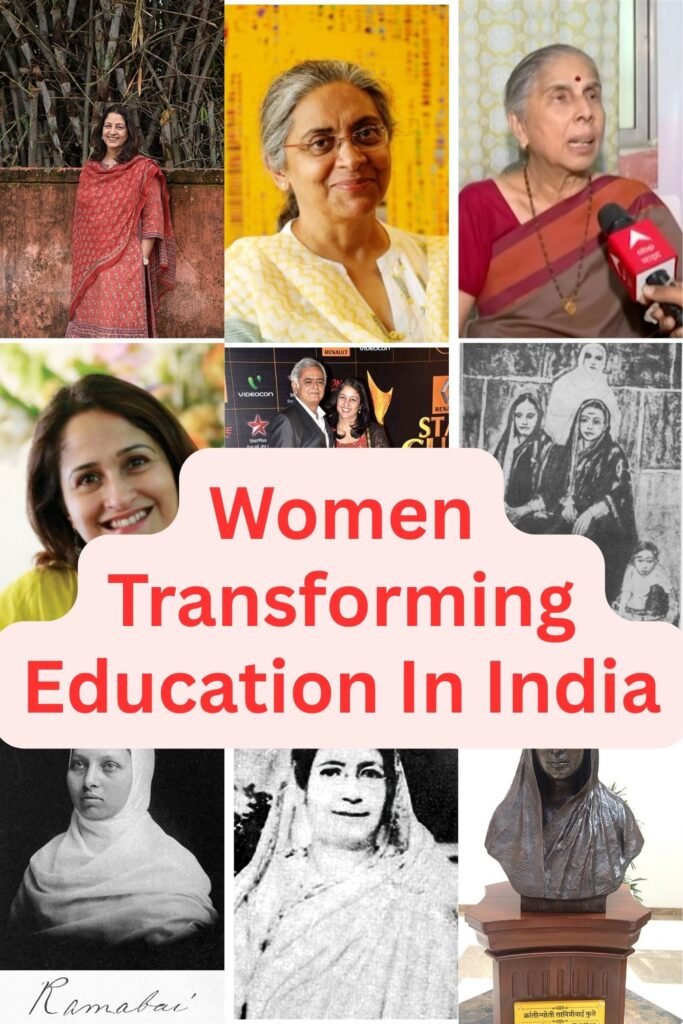
Here are 12 women who transformed education in India, not as a footnote to history, but as its architects.
Table of Contents
Women Transforming Education in India at a Glance
| Name | Contribution |
| Savitribai Phule | First girls’ school |
| Fatima Sheikh | First Muslim woman teacher |
| Pandita Ramabai | Women’s education |
| Rukmini Banerji | ASER & TaRL |
| Safeena Husain | Educate Girls |
| Shaheen Mistri | Teach For India |
| Kiran Bir Sethi | Design for Change |
| Rouble Nagi | Learning centres |
| Mangala Kapoor | Education & Music |
| Rupjyoti Saikia Gogoi | Community learning |
| Armida Fernandez | Medical education |
| Begum Rokeya | Muslim girls’ education |
Savitribai Phule: The Woman Who Opened India’s First Girls’ School
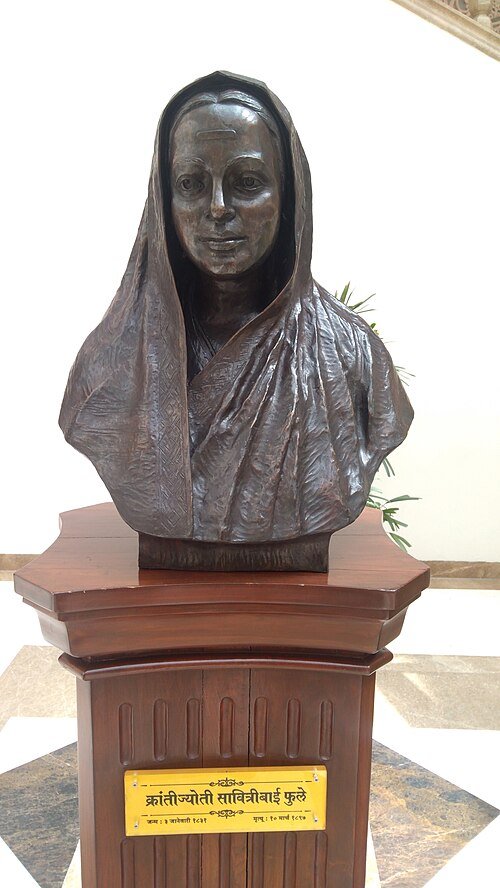
Savitribai Phule was India’s first female teacher, and she earned that title the hardest way possible. In 1848, along with her husband Jyotirao Phule, she opened the first school for girls in Pune, at a time when educating a girl child was seen as an act of rebellion against caste and social order.
She faced abuse every single day on her walk to school — she is said to have carried a spare sari to change into after being pelted with filth by orthodox critics of her work. She didn’t stop. Over the next few years, she and Jyotirao went on to establish multiple schools for girls and for children from the most marginalised castes. Savitribai Phule didn’t just teach children to read; she taught an entire society that girls were allowed to.
Fatima Sheikh: India’s First Muslim Woman Teacher
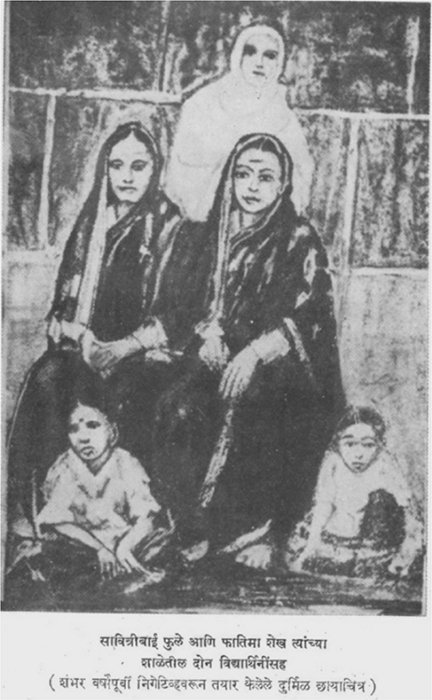
Fatima Sheikh worked alongside Savitribai Phule as a co-teacher and co-founder of these early girls’ schools, at enormous personal risk. As a Muslim woman teaching girls across caste and religious lines in mid-19th century India, she faced resistance from multiple directions — yet she persisted, opening her own home as a school when other spaces were denied to them.
For decades, her contribution was largely left out of the history books that celebrated the Phules. Recovering her story matters, because Fatima Sheikh is proof that the fight for Indian girls’ education was never a solo act — it was a shared, cross-community act of courage from its very first day.
Pandita Ramabai: The Scholar Who Built Homes for India’s Abandoned Women
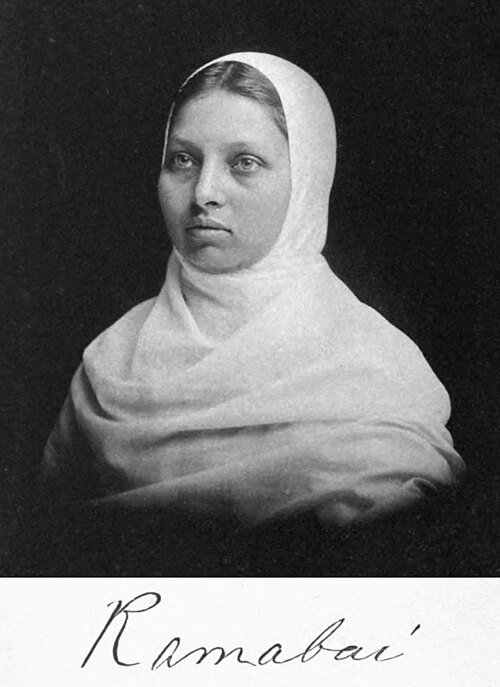
Pandita Ramabai was a Sanskrit scholar so accomplished that Calcutta University awarded her the title “Pandita” — a rare honour for a woman in the 1880s. But her real legacy is Sharada Sadan, the school and home she founded in 1889 for widows and destitute women who had nowhere else to go.
At a time when a widowed woman was expected to disappear from public life, Ramabai gave hundreds of women an education, a vocation, and a reason to imagine a different future. She travelled to the US and England to raise support for her work and returned to build an institution that combined literacy, vocational training, and genuine dignity — decades before “women’s empowerment” was a phrase anyone used.
Rukmini Banerji: The Economist Who Proved India Has a Learning Crisis — and Fixed Part of It
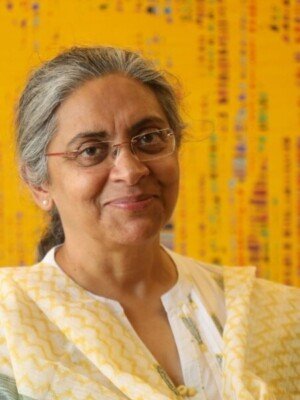
Rukmini Banerji spent close to three decades at Pratham Education Foundation, where she led the Annual Status of Education Report (ASER) — the largest citizen-led household survey in the world, which revealed an uncomfortable truth: millions of Indian children were sitting in school for years without learning to read or do basic arithmetic.
Rather than just publishing the bad news, Banerji’s team built “Teaching at the Right Level” (TaRL), a simple, replicable method that groups children by what they can actually do, not by their grade or age. It now reaches millions of children across India and has been adapted in more than a dozen countries. In 2021, she won the Yidan Prize for Education Development, considered the world’s highest education accolade. Trained as an economist at Delhi School of Economics and a Rhodes Scholar at Oxford, Banerji chose to spend her career making sure a child in a government school in Bihar learns exactly as well as one in an expensive city school.
Safeena Husain: The Woman Bringing Millions of Girls Back to the Classroom
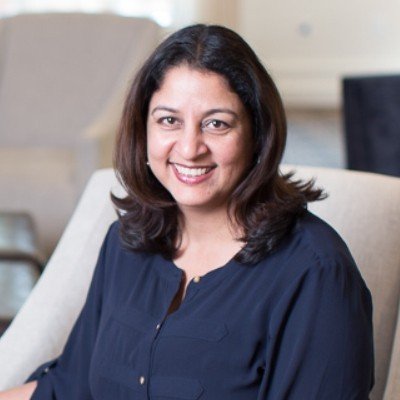
Safeena Husain founded Educate Girls in 2007 after a visit to a remote Himalayan village where a father, without a hint of shame, told her he had no idea how many daughters he had. That moment became her life’s work.
Educate Girls now works door-to-door in some of India’s most underserved districts, using community volunteers to enrol out-of-school girls and improve learning outcomes once they’re inside the classroom. The organisation has helped mobilise over a million girls into school and supported the education of more than 18 million children. In 2023, Husain became the first Indian woman to win the WISE Prize for Education, one of the most prestigious awards in the field, and her organisation also delivered the world’s first Development Impact Bond in education — a financing model that pays for outcomes, not intentions.
Shaheen Mistri: The Teenager Who Built Two of India’s Biggest Education Movements
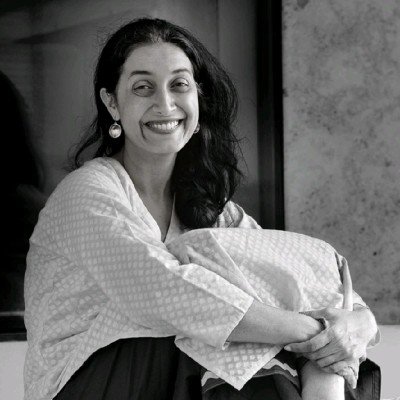
Shaheen Mistri was just 18 when she walked into a Mumbai slum and asked if she could teach the children she found there. That impulse became the Akanksha Foundation in 1989 — an after-school and school-model programme that now reaches thousands of children across Mumbai, Pune, and Nagpur.
In 2008, inspired by the Teach For America model, Mistri founded Teach For India, recruiting college graduates and young professionals to teach for two years in low-income schools. Over 1,700 Fellows and more than a thousand alumni later, many of them have gone on to build their own schools, policies, and organisations. Mistri didn’t just start two institutions — she built a pipeline of future education leaders who are still multiplying her impact today.
Kiran Bir Sethi: The Designer Who Reimagined What a Classroom Could Feel Like
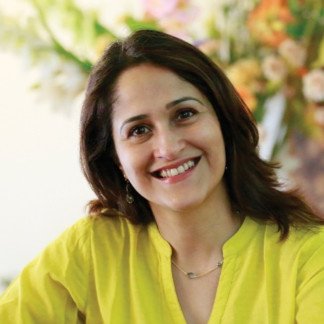
Kiran Bir Sethi wasn’t an educator by training — she was a graphic designer. But when her own son started school in Ahmedabad, she was troubled by how rigid and joyless the classroom experience was for children who were bursting with curiosity everywhere else in their lives.
In 2001, she founded The Riverside School, applying design thinking to the way children learn — treating empathy, questioning, and real-world problem-solving as core curriculum, not an add-on. In 2009, she scaled the idea globally through Design for Change, a movement that uses a simple four-step framework — Feel, Imagine, Do, Share — to help children run their own change projects. It now reaches children across dozens of countries. Sethi’s insight was disarmingly simple: children don’t need to be controlled into learning. They need to be trusted with it.
Rouble Nagi: The Artist Who Turned Slum Walls Into Classrooms
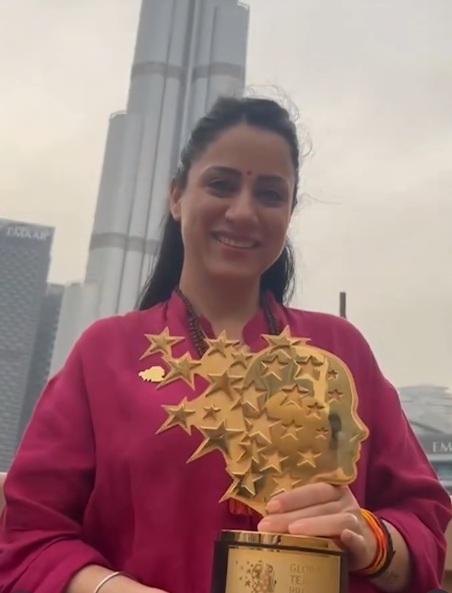
(Read her full Woman of the Week story: Rouble Nagi, Global Teacher Prize 2026 Winner — Turning Art into Education and Slums into Living Classrooms)
Rouble Nagi trained as an artist, not a teacher — but over two decades, she built something no formal education system had managed: more than 800 learning centres across over 100 of India’s most underserved communities, many of them created inside the very slums the rest of the city looked away from.
Her signature idea, “Living Walls of Learning,” transforms neglected, abandoned walls into large, interactive murals that teach literacy, numeracy, hygiene, and environmental awareness to children who had never set foot in a classroom. In 2026, out of nearly 5,000 nominations from 139 countries, Rouble Nagi won the $1 million Global Teacher Prize — the first Indian woman to do so — for proving that a wall, a paintbrush, and enough persistence can bring school to the children the system forgot.
Mangala Kapoor: The Acid Attack Survivor Who Became a University Professor
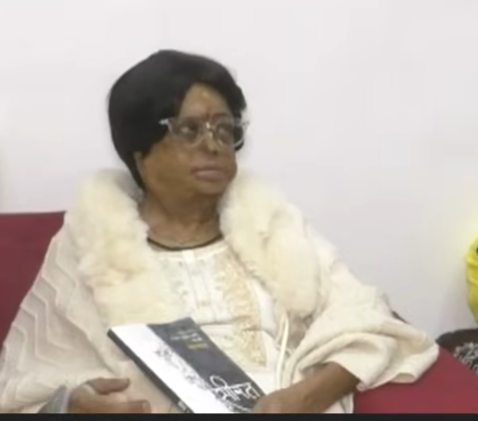
(Read her full Woman of the Week story: Mangala Kapoor — From Silence and Scars to National Recognition)
Mangala Kapoor survived an acid attack at age 12 and spent six years in hospitals enduring 37 surgeries. What saved her, by her own account, was music — and the discipline it demanded of her.
She carried that discipline into academics, eventually joining Banaras Hindu University, where she began teaching in 1989. Over the next three decades as a professor, she shaped generations of students while quietly becoming a custodian of Indian classical music, documenting rare raagas that risked being lost. Known affectionately as “Kashi ki Lata,” Mangala Kapoor’s classroom became proof that education can be both a rescue and a legacy — for her, and for everyone she taught.
Rupjyoti Saikia Gogoi: The Schoolteacher Who Took Her Classroom to the Villages
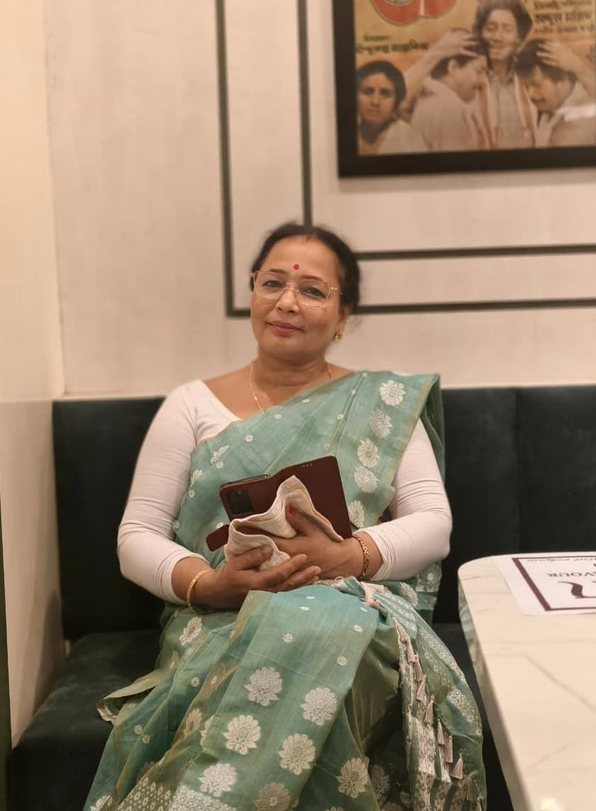
(Read her full Woman of the Week story: From Classroom to Community: Teacher Rupjyoti Saikia Gogoi Turned Plastic Waste into a Livelihood Movement)
Rupjyoti Saikia Gogoi began her career the traditional way — as a schoolteacher near Assam’s Kaziranga National Park. But when she saw plastic waste piling up around the sanctuary, she didn’t just teach children about the problem. She started teaching adults how to solve it.
Combining traditional Assamese handloom techniques with discarded plastic, she built Village Weaves, and has since trained more than 2,300 women across 35 villages in a skill that didn’t exist before her — turning her classroom instincts toward vocational, hands-on education for entire communities. It’s a reminder that “transforming education” doesn’t only happen inside school walls; sometimes a teacher simply takes the lesson to where the students already are.
Armida Fernandez: The Professor Who Trained a Generation of Doctors
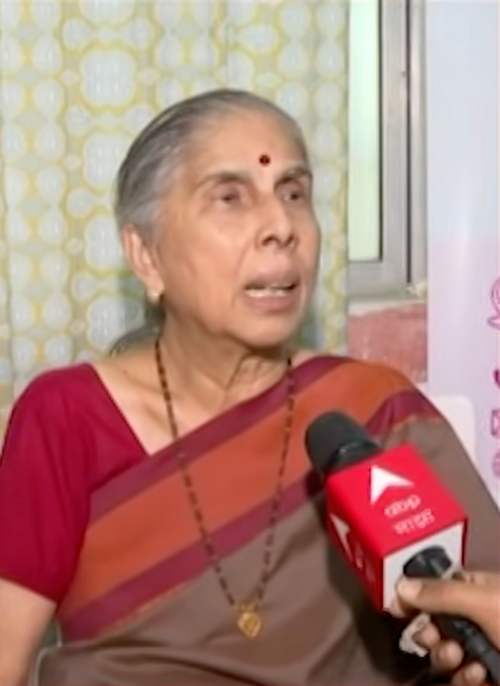
(Read her full Woman of the Week story: Armida Fernandez: When the World Said No, She Built India’s First Human Milk Bank)
Dr Armida Fernandez is best known for pioneering India’s first human milk bank at Mumbai’s Sion Hospital — a medical breakthrough she had to defend all the way to Parliament. But her contribution to education runs alongside that legacy: across a 30-year career, she served as a neonatologist, professor, and eventually Dean at the hospital’s medical college, shaping how an entire generation of doctors was trained in newborn care.
Her story sits at the intersection of medicine and education — a reminder that some of the most consequential teaching in India doesn’t happen in a school at all, but in the wards and lecture halls where future doctors learn what it means to fight for a patient who cannot yet speak for themselves.
Begum Rokeya Sakhawat Hossain: The Writer Who Fought for Muslim Girls’ Education
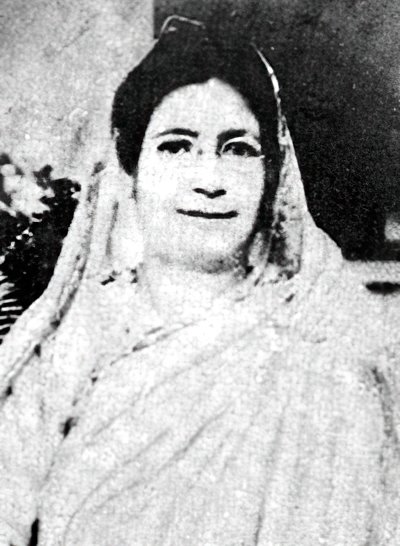
Begum Rokeya spent her life pushing back against a world that saw purdah and an education for girls as incompatible. In 1911, she founded the Sakhawat Memorial Girls’ School in Kolkata, one of the earliest institutions dedicated to educating Muslim girls in the subcontinent — going door-to-door herself, at times, to convince families to send their daughters.
She was also a writer, best known for “Sultana’s Dream,” a short story that imagined a world where gender roles were reversed and women ran a technologically advanced society through science and education. More than a century later, her school still stands in Kolkata — proof that she built not just an idea, but an institution that outlived her.
What These Women Have in Common
None of these women waited for permission. Savitribai Phule didn’t wait for society to approve of educating girls. Rouble Nagi didn’t wait for a ministry to fund her murals. Rupjyoti Saikia Gogoi didn’t wait for a grant before she picked up a plastic strip and started weaving.
If you’re a woman standing at your own crossroads right now — returning to work after a career break, considering a pivot you’re not sure you’re “qualified” for, or simply wondering if the thing you care about is worth building — their stories carry the same quiet message: the credential often comes after the courage, not before it. You don’t need permission to start. You need a problem you can’t stop thinking about, and the willingness to take the first uncomfortable step toward solving it.
This is where every education revolution in India actually began — not with a policy, but with one woman who decided a child deserved better.
References
- Savitribai Phule — biography, National Commission for Women archives: https://ncw.nic.in
- Fatima Sheikh — Sarvajanik Granthalaya historical records
- Pandita Ramabai — Sharada Sadan history, Ramabai Mukti Mission: https://ramabaimuktimission.org
- Rukmini Banerji, Yidan Prize 2021: https://www.pratham.org/2021/09/27/pratham-ceo-dr-rukmini-banerji-awarded-the-2021-yidan-prize-for-education-development/
- Safeena Husain, WISE Prize 2023: https://www.educategirls.ngo/wise2023/
- Shaheen Mistri, Teach For India: https://teachforall.org/partner-ceo/shaheen-mistri
- Kiran Bir Sethi, Design for Change: https://www.dfcworld.org/SITE/
- Founder Rouble Nagi, Global Teacher Prize 2026: https://globalteacherprize.org/pages/rouble-nagi
- Mangala Kapoor — Woman of the Week, WorkWellWomaniya: https://workwellwomaniya.com/woman-week-mangala-kapoor/
- Rupjyoti Saikia Gogoi — Woman of the Week, WorkWellWomaniya: https://workwellwomaniya.com/woman-week-rupjyoti-saikia-gogoi/
- Armida Fernandez — Woman of the Week, WorkWellWomaniya: https://workwellwomaniya.com/woman-week-armida-fernandez/
- Begum Rokeya Sakhawat Hossain — Sakhawat Memorial Girls’ School history