
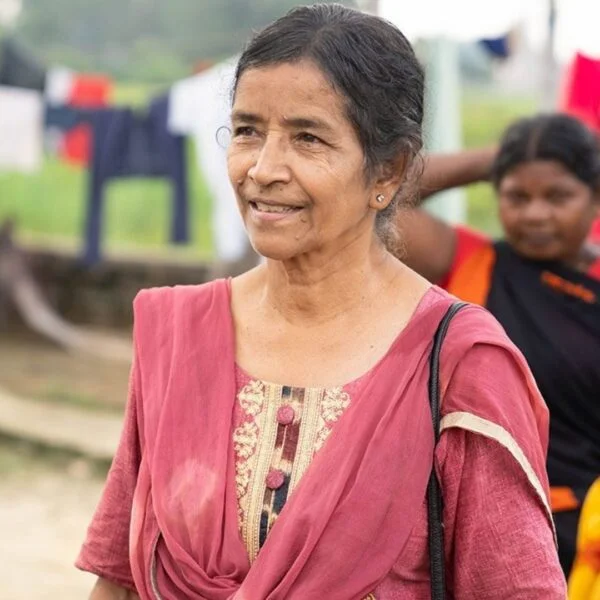
Padma Shri Awardee · Founder, Nari Gunjan · “Cyclewali Didi” to Lakhs of Musahar Families.
There’s a photo you won’t find in any glossy magazine spread. It’s of a young woman from a comfortable Kerala household, sitting cross-legged inside a mud hut in a Musahar tola in Bihar, eating rice cooked the way the community she’d chosen to live among cooked it because that was the only way they’d ever trust her.
That woman is Sister Sudha Varghese. And her story isn’t the pretty, tied-with-a-bow kind of inspiration you scroll past on Instagram. It’s messy, exhausting, and full of moments where giving up would have been the easier, saner choice. That’s exactly why it’s worth telling.
Table of Contents
| Detail | Information |
| Name | Sister Sudha Varghese |
| Also Known As | Sister Sudha, Cyclewali Didi |
| Profession | Social Worker, Former Catholic Nun |
| Organisation | Nari Gunjan (founded 1987) |
| Known For | Empowering the Musahar (Dalit) community of Bihar |
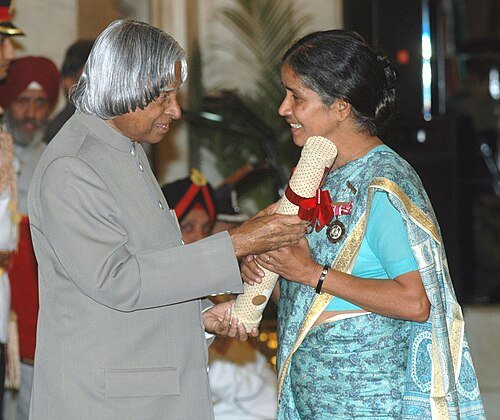
| Major Award | Padma Shri (2006) |
| Based In | Jamsaut village, Patna district, Bihar |
Who Is Sudha Varghese?
Sudha Varghese is a social worker from Kottayam, Kerala, who left home as a teenager, joined a religious order, and moved to Bihar to teach. What started as convent-school teaching turned into something far bigger: nearly six decades of living and working among the Musahar community, one of the most oppressed Dalit groups in India, historically pushed to the very bottom of the caste hierarchy and, in a cruel bit of irony, named after the word for “rat-eater” because desperate poverty once forced some of them to eat rats to survive.
She’s not a distant donor or a once-a-year visitor. She moved into a Musahar settlement and stayed. For decades. That single decision is the whole story. Everything else is just what grew out of it.
Like Sister Sudha Varghese, Rouble Nagi also turned her work into a mission to bring change to underserved communities. Check her story.
From a Magazine Photo to a Mud Hut: How It All Began
Here’s the part people love to romanticise, so let’s not. As a schoolgirl in Kerala, flipping through a magazine, Sudha saw a photograph of a ramshackle roadside hut in Bihar, a caption explaining that this was how some of India’s poorest families lived. She came from a well-off family. She couldn’t unsee it.
Her family didn’t support the path she eventually chose, leaving home, joining religious life, and heading to a state she barely knew, in a language she barely spoke. She had little knowledge of Hindi or English when she arrived in Bihar in the late 1960s. Imagine that: a teenager, cut off from her comfort zone, in a place where she couldn’t even communicate properly, choosing to stay anyway.
For years, she taught in Church-run schools that mostly served children from well-off families—the same pattern of privilege she’d wanted to escape, just repackaged. It wasn’t until 1977, when she began actually visiting Musahar villages, that she saw what real, grinding exclusion looked like. No access to healthcare. No land. No literacy. Women and girls are routinely facing sexual violence with almost no legal recourse. That visit didn’t just move her — it redirected her entire life.
Read also: How Varsha Deshpande has spent decades fighting for the rights and dignity of women.
The Community Nobody Wanted to Touch
The Musahars weren’t just poor. They were considered “untouchable” even within an already marginalised Dalit framework — sometimes called “Mahadalit,” or Dalit among Dalits. According to the 2011 Census, literacy among Musahars stood at roughly 2% for men and under 1% for women. Read that again. Under 1%.
To even be accepted by the community, Sudha had to earn trust the hard way — she moved into their settlement, lived in a mud hut, and ate what they ate, prepared the way they prepared it. That wasn’t a gesture for the cameras. There were no cameras. It was simply what it took to be seen as one of them and not another outsider passing judgment from a distance.
Building Nari Gunjan From Nothing
In 1987, she founded Nari Gunjan (“Women’s Voice”), a non-profit built to help Dalit women understand and access their rights. It began small — teenage girls gathered in her home, learning to read, write, sew, and manage money. It grew into something much larger: education centres, legal literacy campaigns, livelihood programmes, and eventually residential schools.
She didn’t stop at activism, either. Recognising that she needed real legal standing to fight cases effectively, she went back to studying — this time law — so she could personally navigate the legal hurdles standing between Musahar women and justice.
Her Achievements: What 50+ Years of Grit Actually Built
- Founded Nari Gunjan in 1987, now running dozens of centres across Patna, Gaya, Saran, and Purnea districts of Bihar.
- Established Prerna, a residential school in Danapur (2005), later replicated as Prerna 2 in Gaya at the request of the Bihar Chief Minister, after he saw what the first school had achieved.
- Has helped educate an estimated 40,000+ children from the Musahar community over the decades.
- Reported and pursued nine rape cases within two years in a single area early in her work — at a time when survivors were too afraid of the police to even file a complaint.
- Set up the Nari Gunjan Sargam Mahila Band, an all-women band that has performed internationally, and helped Musahar boys form cricket teams — currently around 35 teams and 500 players.
- Runs hostels housing nearly 250 Musahar girls, alongside services for the elderly and an adoption agency.
- Served as Vice-Chairperson of the Bihar State Minorities Commission.
- Earned the nickname “Cyclewali Didi” — the sister on a bicycle — from travelling thousands of kilometres, often on foot or by cycle, to reach Musahar hamlets scattered across the state.
- With her support, around 5,000 landless women from the Musahar community are now engaged in agriculture, with many using their farming earnings to purchase land of their own.
The Challenges She Faced And They Weren’t Small
This is the part that doesn’t get pretty, and it shouldn’t be softened.
When Sudha started reporting rape cases on behalf of Musahar women, she ran into a police force that openly mocked survivors. She has recounted an officer’s response to a rape complaint: essentially questioning why anyone would assault a girl dressed so poorly, as if poverty made violence against her less real. That was the system she was up against, not just individual prejudice.
Standing up to that system came at a cost. There were, in her own words, deliberate attempts to drive her out of the village and turn people against her, along with direct threats to her life. Demanding fair wages for landless labourers and challenging upper-caste men who exploited Musahar women meant constant resistance because caste didn’t stop powerful men from exploiting the very community they considered “untouchable.” That contradiction alone tells you how deep the rot was.
She also had to fight the slower, quieter battle of building trust in a community so repeatedly betrayed by outsiders that scepticism was a survival skill. Convincing terrified, illiterate women that they had legal rights, and that using them wouldn’t get them killed or ostracised, took years, not weeks.
Her Personal Struggles: The Cost Nobody Talks About
Sudha gave up the version of life most people quietly assume is the “safe” one. Her family wasn’t on board when she chose religious life and a posting in a state far from home. She arrived without fluency in the local languages, without institutional protection, and without the comfort of familiar surroundings, and she stayed anyway, in a mud hut, for close to three decades.
There’s a line she’s said that sums up the emotional weight of it better than any summary could: even in the face of threats, she chose not to let fear show, because showing it would have undone years of painfully built trust. That’s not a throwaway inspirational quote. That’s a woman who had to manage genuine fear, for her safety, for her work, for the people depending on her, largely alone, for years, without the option of falling apart in public.
She didn’t get to compartmentalise “work” and “personal life” the way most of us do. Her home was the Musahar settlement. Her family, in a very real sense, became the community she served. That’s not a small sacrifice. It’s a total restructuring of what a life looks like.
The Awards She’s Received
- Padma Shri (2006): India’s fourth-highest civilian award, presented by then-President A. P. J. Abdul Kalam, in recognition of her work with the Musahar community.
- Vanitha Woman of the Year (2017): instituted by the Malayala Manorama Group.
- “Icon of Bihar” recognition for her decades of grassroots work in the state.
None of these came early, and none of them came easy. They arrived after decades of unglamorous, often invisible, ground-level work, long before anyone outside Bihar knew her name.
What Other Women Can Learn From Her Journey
Here’s the honest takeaway, minus the filter: Sudha Varghese didn’t have a smooth path lined up with mentors, funding, and family cheerleading. She had a decision to make, over and over again, for fifty-plus years: stay or leave, push or back off, speak up or stay quiet. She kept choosing to stay, push, and speak up, even when it was frightening and even when progress was painfully slow.
A few things worth sitting with:
- You don’t need permission to care about something inconvenient. Her family didn’t support her choice at first. She made it anyway, because the alternative, knowing and doing nothing was worse.
- Trust is built, not assumed. She didn’t walk in expecting the Musahar community to believe her intentions. She lived among them, ate what they ate, and let years of consistency do the talking.
- Systems don’t change because you’re polite about it. Reporting nine rape cases in two years, in a system openly hostile to survivors, took confrontation, not diplomacy.
- Fear doesn’t have to be the loudest voice in the room. She’s been open that she felt afraid. She simply decided fear wouldn’t be visible in the moments that mattered.
- Real impact is slow, unglamorous, and rarely convenient. No one arrives at “40,000 children educated” quickly. It’s built one mud hut, one legal case, one classroom at a time.
Everyone hits a wall, a family that doesn’t understand, a system stacked against them, a moment of genuine fear. The difference isn’t that women like Sudha Varghese didn’t face any of that. It’s that they kept showing up on the other side of it anyway.
Here are all the sources I used to research and write the Sudha Varghese post:
References
- Wikipedia – Sudha Varghese – Basic biographical details (birth date, birthplace, current residence in Jamsaut, Patna district).
- The Better India – “Sudha Varghese Spent 30 Years Transforming Lives of Bihar’s Musahars” – Details on founding Nari Gunjan (1987), her law studies, the Prerna school (2005) and Prerna 2 in Gaya, and her Padma Shri recognition.
- RVA (Radio Veritas Asia) – “Sister Sudha Varghese: Empowering the Forgotten Musahar Community” – Her move to Bihar in 1968, the 2011 Census literacy statistics for Musahars, and details on the 2006 Padma Shri ceremony with President Abdul Kalam.
- DonateKart – “Support this Padma Shree Awardee Feed The Musahar Community Of Bihar” – Background on the Musahar community’s history/name origin, and details on the Vanitha Woman of the Year (2017) and “Icon of Bihar” awards.
- YourStory – “Meet the woman who has been working to uplift women and girls of Bihar’s Musahar community” – The rape case reporting, the police officer’s dismissive response, threats to her life, plots to drive her out of the village, and the Sargam Mahila Band/international martial arts detail.
- Praguntatwa – “#WATWB Meet Sister Sudha – Balancing Panchtatwas With Creativity” – Details on her early teaching years, the five vocational centres, and the scale of Nari Gunjan’s reach (1,500+ girls, 50+ centres).
- Joy of Helping – “Mrs. Sudha Varghese” – Details on her early life in Manjoor, Kottayam, her move to Patna district in 1986, and the Kishori Kendras/Anand Shiksha Kendras run by Nari Gunjan today.
- Nari Gunjan (official site) – “Sudha Varghese” – The “Cyclewali Didi” nickname, the 40,000+ children educated figure, and Nari Gunjan’s reach across Patna, Gaya, Saran, and Purnea districts.
- The Friday Mania – “I reached Bihar to meet the poor and work for them: Padma Shri Sudha Varghese” – Her role as former Vice-Chairperson of the Bihar State Minorities Commission, the 5,000 women in agriculture detail, and the cricket teams for Musahar boys.
- Indian Currents – “Breaking Barriers: Sudha Varghese Sets Example” by A. J. Philip – The detail about eating rat (prepared the community’s way) to earn trust, moving into the mohalla, and resistance/threats faced while demanding fair wages.
- Gates Notes (Bill Gates) – “This Indian hero inspires and empowers girls” – The origin story about the magazine photo that first moved her, and her family’s lack of support for her chosen path.
- Catholic Connect – “Sr Sudha Varghese: A Life Poured Out in Service For The Marginalized of Bihar” – Quotes on her motivation (“I came not just because I could, but because I felt I must”) and the grain-shed teaching origin.
- Human Rights Watch – “Broken People: Caste Violence Against India’s ‘Untouchables'” – Corroborates her long-standing, recognized work with Nari Gunjan in the context of Dalit rights in Bihar.
FAQs
Who is Sudha Varghese?
Sudha Varghese is a social worker and former Catholic nun from Kerala who has spent more than five decades living and working among Bihar’s Musahar community, one of India’s most marginalised Dalit groups, through her organisation Nari Gunjan.
What is Nari Gunjan?
Nari Gunjan (“Women’s Voice”) is a non-profit organisation Sudha Varghese founded in 1987 to help Dalit women and girls of the Musahar community access education, legal rights, healthcare, and livelihood opportunities.
Which award is Sudha Varghese best known for?
She is best known for receiving the Padma Shri in 2006, India’s fourth-highest civilian honour, presented by then-President A. P. J. Abdul Kalam.
Why is she called “Cyclewali Didi”?
She earned this affectionate name from the Musahar community for travelling long distances, often by bicycle or on foot, to reach remote hamlets across Bihar over the decades.
What challenges did Sudha Varghese face in her work?
She faced hostility from police and local authorities while pursuing justice for rape survivors, threats to her personal safety, attempts to drive her out of the village, and resistance from upper-caste groups when she pushed for fair wages and rights for the Musahar community.