
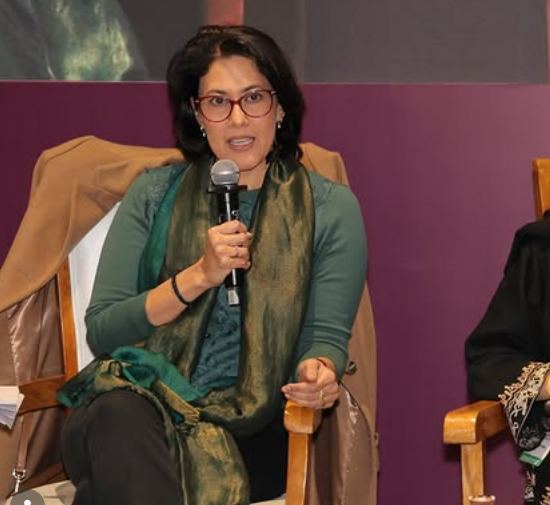
MBA graduate · Youngest sarpanch in India · Former head of Soda village, Rajasthan
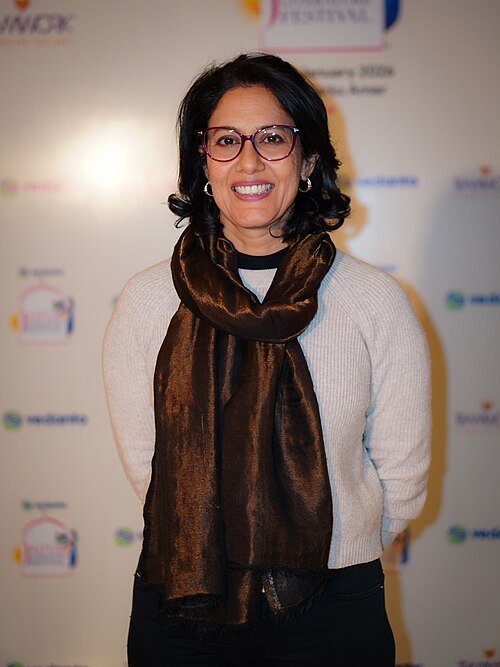
Chhavi rajawat had every reason to stay in the city.
An MBA. A corporate resume with Bharti Airtel, the Carlson Group, and the Times of India on it. A comfortable, predictable life in Jaipur.
Chhavi Rajawat walked away from all of it to lead a village of mud houses, erratic electricity, and a drought that wouldn’t quit.
Table of Contents
The Corporate Life She Left Behind
Born in Jaipur, Chhavi studied at Rishi Valley School, Mayo College Girls’ School, and Lady Shri Ram College before completing her MBA. She built exactly the kind of career an MBA is supposed to lead to: structured, well-paid, urban.
By most standards, she had already made it.
But every summer, as a child, she went back to Soda — her family’s ancestral village in Rajasthan’s Tonk district. Not for an event. Not for a project. Just to visit. Year after year, those visits built something that no corporate job could: a real, lived connection to a place and its people.
That connection would matter more than her degree ever did.
The Village That Needed Her
By 2009, Soda was in crisis. One of the worst droughts the village had ever experienced had killed livestock, left fields without fodder, and forced people to draw water that had been declared unsafe even for irrigation.
The village’s residents didn’t call a government office. They called Chhavi.
In 2010, at the age of 29, she was elected sarpanch of Soda — becoming the youngest sarpanch in India and, by most accounts, the country’s first sarpanch with an MBA. Her grandfather, Brigadier Raghubir Singh, had held the same position two decades earlier. The villagers, she has said in past interviews, broke every barrier of caste, gender, and religion to elect her.
Development, not identity, was what they were voting for.
The Challenges: What the Title Didn’t Prepare Her For
Here’s what most headlines about Chhavi Rajawat leave out: winning the election was the easy part.
In her own words from an earlier interview, the post of sarpanch, structurally, has very little real power attached to it. Panchayats often have no independent funds and no discretionary authority, leaving them dependent on district officials who may or may not share the same urgency. She has called this less a gender problem and more a systemic one — a structure that doesn’t trust local governance enough to actually empower it.
Then there was the ground reality. A village where houses were made of mud. Where literacy sat below 50 percent. Where a woman in jeans, refusing the traditional ghoonghat, was already breaking an unspoken rule before she’d built a single road.
In her conversation with Red FM Rajasthan, the RJ asked her the question most people wonder about but rarely ask directly: did being a woman make this harder? According to what she shared in that interview, it wasn’t the obstacle people assumed.
She explained that the villagers had come to treat her like their own daughter, and that sense of belonging made the role easier to hold, not harder — something she traced back to those childhood summers spent in Soda long before anyone saw her as a future leader.
It’s a sentiment she has echoed elsewhere too. In an earlier interview, she put it simply: within her village, she found herself at a clear advantage, with everyone treating her as “the daughter of Soda.”
What She Built: Water, Roads, and a Reopened College
While the challenges were real, so was the follow-through.
Chhavi led the desilting and revival of Soda’s main reservoir and several smaller ponds, improving rainwater harvesting for a village that had been living on borrowed time with its water supply. Roughly 800 households got water pipelines. A similar number got toilets, in a village where open defecation had been the norm. Roads were built where none existed — including one in the main village square that locals now point to as proof that trucks can finally reach Soda.
She helped set up a branch of the State Bank of India so villagers no longer had to travel elsewhere for basic banking. She revived a defunct girls’ college that had been on the verge of shutting down, giving young women in Soda access to teaching degree programs they wouldn’t otherwise have had. She has since turned her attention to a digital literacy centre.
None of this came from a business school case study. It came from showing up, every day, in a place with no fixed rulebook.
How She Overcame It: Structure, Youth, and a Bigger Argument
When the RJ asked whether her MBA had actually helped, her answer, as she described it in the interview, was a qualified yes. The degree gave her a framework for structure and management. But she was clear that a village doesn’t run like a company. There’s no hierarchy chart, no fixed process. Whatever order she brought to the role, she had to build herself.
One of the more hopeful threads in the conversation was about Soda’s youth. She spoke about the strong support she’s received from the village’s younger generation in her broader goal: narrowing the gap between rural and city life.
And when the RJ pushed her on how she planned to inspire more young people to actually move toward rural India instead of away from it, her answer went beyond her own story. As she put it in the interview, Indian media tends to gravitate toward negative stories — the scams, the failures. But positive stories exist in equal measure, and hers was proof of it.
She pointed out that interviews and podcasts like that one are exactly what put those stories in front of people, and that this visibility can shift how a young person imagines their own future. She didn’t deny that corruption exists. She said it plainly. But she added that alongside it are good people doing good work — and it’s because of them that the country keeps running at all.
The Recognition That Followed
Soda’s transformation didn’t go unnoticed. Chhavi was named a Young Global Leader by the World Economic Forum in 2012 and co-chaired the WEF India Summit that same year. She addressed delegates at the 11th Infopoverty World Conference at the United Nations in 2011. Former President APJ Abdul Kalam honoured her at a Technology Day function in New Delhi. She was recognised as a “Young Indian Leader” by CNN-IBN, and The Times of India credited her as the changing face of rural Rajasthan.
She has since served as a resource person for the state government’s capacity-building programs for other sarpanches, and was selected Director of the Bhartiya Mahila Bank.
What Chhavi’s Story Says to You
Maybe you’re not deciding between a village and a boardroom.
But maybe you’re deciding between the path everyone expects of you and the one that actually calls to you. The comfortable, structured career versus the one with no clear rulebook. The safe next step versus the one that means starting over, in a place where your degree only gets you halfway there.
Chhavi’s story doesn’t say an MBA is wasted outside a corporate office. It says the opposite: what you’ve learned can go anywhere, if you’re willing to build the rest yourself.
For the women who read WorkWellWomaniya, especially those re-entering their careers after a gap, that’s the real takeaway. You don’t need a manual for the next chapter. You need roots, a reason, and the willingness to show up even when there isn’t a system waiting to make it easy for you.
She calls Soda home, not a project.
What would you call the place you’re building, if you stopped waiting for permission to begin?
📚 References
- Wikipedia — Chhavi Rajawat: https://en.wikipedia.org/wiki/Chhavi_Rajawat
- The Tribune — “MBA-turned-sarpanch brings winds of change in Rajasthan village”: https://www.tribuneindia.com/news/schools/mba-turned-sarpanch-brings-winds-of-change-in-rajasthan-village-231355/
- The Better India — “The ‘MBA Sarpanch’ Who Kept All Her Promises”: https://thebetterindia.com/350255/chhavi-rajawat-sarpanch-mba-soda-village-rajasthan-water-roads-college-digital-literacy-help-farmers/
- Women’s Web — “Chhavi Rajawat: The Telecom Professional Turned Sarpanch”: https://www.womensweb.in/2014/07/chhavi-rajawat-sarpanch-interview/
- London Speaker Bureau — Chhavi Rajawat profile: https://londonspeakerbureau.com/speaker-profile/chhavi-rajawat/
- Chhavi Rajawat, in conversation with Red FM Rajasthan (YouTube): https://www.youtube.com/watch?v=JLPPtuz2-P4