
Mother’s Day Special | Real stories from across India
Every year on Mother’s Day, we celebrate mothers with flowers, cards, and warm posts. This year, we wanted to go deeper.
We went looking for the mothers nobody writes about. The ones who didn’t have a safety net, a supportive family, or a single rupee of savings when life came crashing down. Women who were thrown out, abandoned, widowed young, or forced into circumstances they never chose.
Table of Contents
What we found was extraordinary. Seven women. Seven different corners of India. Seven kinds of impossible odds. And in each story, the same stubborn refusal to stop.
These are not feel-good stories. They are hard, real, and sometimes painful. But they are also among the most remarkable things a human being can do: turn complete devastation into a life worth living, and then some.
We are sharing their short-form stories on YouTube Shorts and Instagram Reels. This post is for those of you who want to know more: the full story, the real details, the names that deserve to be remembered.
1. Mithu Pandit — Kolkata, West Bengal
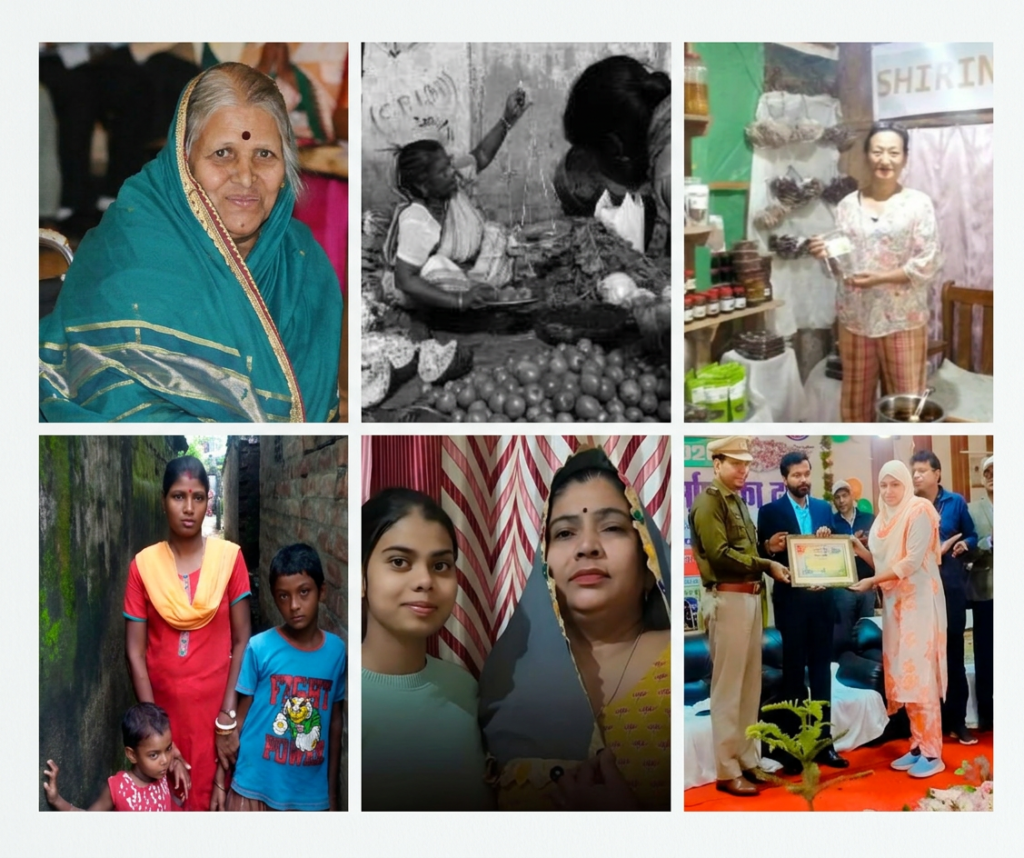
Who she is: A domestic worker and daily commuter who is putting her daughters through school one shift at a time.
Mithu Pandit boards the first local train out of Sonarpur before most of Kolkata has opened its eyes. Her destination is the city, not for herself, but for her daughters.
She is a domestic worker who commutes daily by local train to juggle three different employers across the city. She washes dishes, sweeps floors, and rushes from one home to the next before noon. The work is physically exhausting, chronically underpaid, and largely invisible, the kind of labour that keeps urban households running but rarely makes it into any acknowledgment or record.
Mithu is not simply surviving. Every rupee she earns goes toward a single purpose: keeping her daughters in school. She believes, with a quiet and unshakeable certainty, that education is the one thing that can break the cycle she has lived inside.
“As long as I am there, they will always have support to achieve their dreams.” — Mithu Pandit
She is not bitter about the commute or the work. She is strategic about it. Her story is not one of dramatic triumph or award ceremonies. It is something rarer: a mother who shows up, every single day, so that her children don’t have to face what she has faced.
Mithu is one of millions of commuting domestic workers who form the invisible backbone of India’s urban economy. Her story was documented as part of a study on women commuting to Kolkata for domestic work, published as an illustrated short story by researchers at the University of Edinburgh, a portrait of what daily sacrifice actually looks like.
What she has built: Two daughters in school. A future she is financing one shift at a time.
2. Sindhutai Sapkal — Wardha, Maharashtra
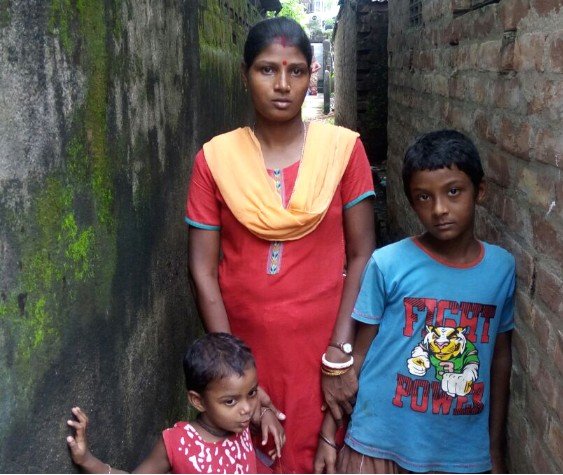
Who she was: A woman thrown out of her home at nine months pregnant who went on to become mother to over 1,500 orphaned children. Known across India as “Mai.”
The facts of Sindhutai Sapkal’s early life are almost too devastating to read in sequence.
She was born in 1948 as an unwanted child. Her family called her Chindhi, meaning a torn piece of cloth. She was married at 12 to a man 20 years older than her. Formal schooling ended after the fourth standard. By the time she was 20, she had three sons and was pregnant with her fourth child.
Then, having spoken up against a corrupt local landlord who was cheating villagers out of wages, she was turned on. The landlord spread rumours of infidelity. Her husband beat her and threw her out of their home in the middle of the night, nine months pregnant. Her own mother turned her away too.
That night, Sindhutai gave birth alone in a cowshed, using a sharp stone to sever the umbilical cord. She walked to a crematorium and took shelter there. When she was hungry, she scraped flour left as offerings near the funeral pyres and cooked it on the flames.
She began begging and singing on local trains to feed herself and her daughter. And it was on those trains that she first encountered children in a worse situation than her own, orphaned, abandoned, starving. Her heart would not let her pass them by. She started taking them in, one by one, begging harder to feed an ever-larger family.
“My husband rejected me and that is why I achieved what I did. If he had not thrown me out, I would have been content with what I had.” — Sindhutai Sapkal
Over the next five decades, Sindhutai, who became universally known as Mai, meaning mother, adopted over 1,500 orphaned children. She gave away her own biological daughter to a trust in Pune specifically so that she could not show partiality among her adopted family. She set up six orphanages across Maharashtra. She received over 750 awards. In 2021, she was awarded the Padma Shri, India’s fourth-highest civilian honour.
When her estranged husband appeared at one of her events in his old age, weeping and broken, Sindhutai accepted him into her orphanage, and introduced him to everyone as her eldest child.
A Marathi biopic, Mee Sindhutai Sapkal (2010), was made about her life. It won four National Film Awards and was selected for the world premiere at the 54th London Film Festival.
Sindhutai passed away on 4 January 2022, aged 73. Her 1,500 children continue her work.
What she built: 6 orphanages. 1,500+ children raised. A legacy that outlived her.
Sources: Wikipedia; The Borgen Project; Sindhutai Sapkal Foundation; Asian Journal of Women’s Studies, Vol. 23.
3. Yangmila Zimik — Ukhrul, Manipur
/english-betterindia/media/post_attachments/uploads/2024/12/Shirin-Products-1735191299.jpg)
Who she is: A single mother who started a food business with ₹500 and a tin of wild fruit, and built it into a pan-India brand.
In 1991, Yangmila Zimik became a mother at 21 in Ukhrul, Manipur, without a husband, without alimony, and without community support. Her partner took no responsibility for the child, left no financial provision, and offered no emotional presence. She was unmarried, alone, and in a region where such circumstances carried heavy social stigma.
Her own childhood had not been easy either. Her mother died when she was three. Her father remarried. With six siblings and scarce resources, her formal education was cut short. But Yangmila had something that couldn’t be taken away, a fierce practical intelligence and hands that could make things.
In 2015, she attended a food processing training organised by a local NGO. She came away thinking not of business, but of her son and of making something good. She spent ₹500 on gooseberries and sugar, made a batch of candy at home, and left a few packages at local shops to see if they would sell.
They sold out immediately.
“Neither he nor his family took any responsibility for the child. I didn’t receive any alimony either. But how could I turn my back on my child? I took on all the responsibility.” — Yangmila Zimik
Yangmila began foraging from the forests her community had always known, roselle, wild olives, gooseberries, galho leaves, plums, guavas, kiwis, and hog plums, and processing them into products at home. In 2017, she attended a pickle-making workshop at the local Krishi Vigyan Kendra, and officials there helped her set up a small production unit.
In 2019, she formally registered Shirin Products. Today the brand carries 35 entirely organic product lines, sources fruit from over 100 farmers across 20 villages, employs six local women, and sells across Manipur, Assam, Nagaland, Mumbai, and Delhi. Monthly revenue exceeds ₹1 lakh.
She received the Vijaya Lakshmi Das Entrepreneurship Award (2020) and the Assam Women Entrepreneurs Award (2021). Manipur’s Chief Minister publicly commended her work. Her son, Shangreiphao, is currently completing his Master’s degree in Forestry.
What she built: Shirin Products, 35 organic SKUs, 100+ farming families supported, sold across India. From ₹500 to ₹1 lakh+ monthly.
Sources: YourStory / HerStory (July 2022); The Better India (January 2025); NewsBytesApp.
4. Roshni Perween — Kishanganj, Bihar
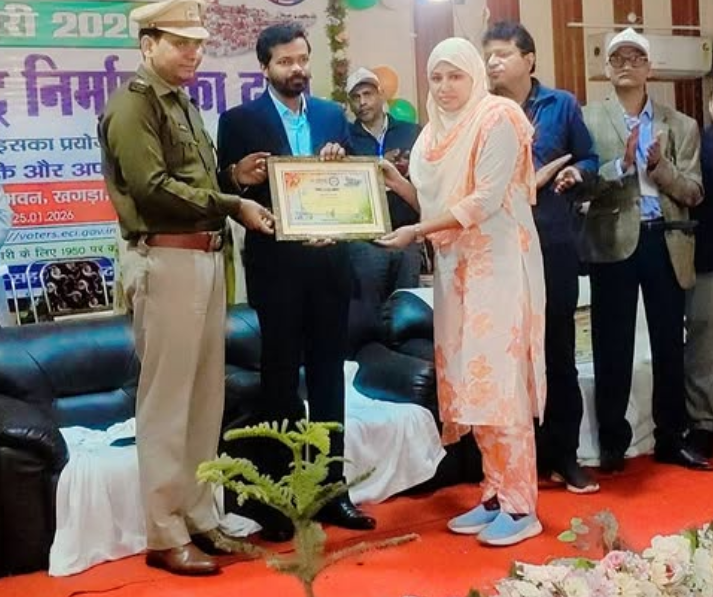
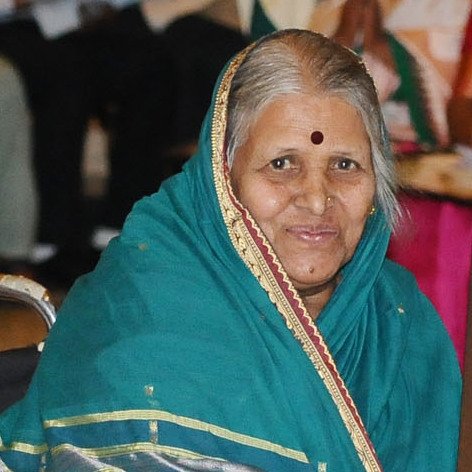
Who she is: A child bride who became the first Indian youth leader ever honoured at the United Nations Young Activists Summit.
Roshni Perween was 13 years old when she was forced into marriage with a 45-year-old man. By the time she was 15, she was a mother. In the years that followed, she endured violence, isolation, and a world that told her, consistently and from every direction, that this was simply her fate. That girls from places like Kishanganj did not get to choose differently.
Roshni chose differently.
She found support through the Nguvu Change Leaders programme and, over years of sustained work, transformed her personal experience into a public mission. She became a child marriage prevention activist, working in her community to interrupt the same cycle that had stolen her own childhood. She counselled families, spoke with young women, and built the kind of credibility that comes only from having lived what you are fighting against.
“At 13, I was forced into marriage with a 45-year-old man. I endured violence and unimaginable pain. By 15, I became a mother — but I found the courage to seek a new future for myself.” — Roshni Perween, UN Young Activists Summit, Geneva, November 2023
In November 2023, at just 25 years old, Roshni stood at the United Nations Young Activists Summit in Geneva, Switzerland. She became the first Indian youth leader ever to be honoured at this summit, recognised alongside activists from Myanmar, Burkina Faso, Colombia, and Sudan.
On her return to India, she was invited to speak at the launch of Nai Chetna Abhiyaan, a national programme against gender-based violence run by the Government of Bihar.
What makes Roshni’s story particularly extraordinary is the timing. She did not wait until she had fully healed before helping others. She turned her pain into protection while she was still in the middle of her own recovery — because she knew that every day she waited was another girl being handed the life she had survived.
What she built: A grassroots movement protecting girls from child marriage in Bihar. Recognition at the highest international level.
Sources: The Hans India (December 2023); UN Young Activists Summit official documentation; Nguvu Change Leaders programme.
5. Krishna Yadav — Delhi
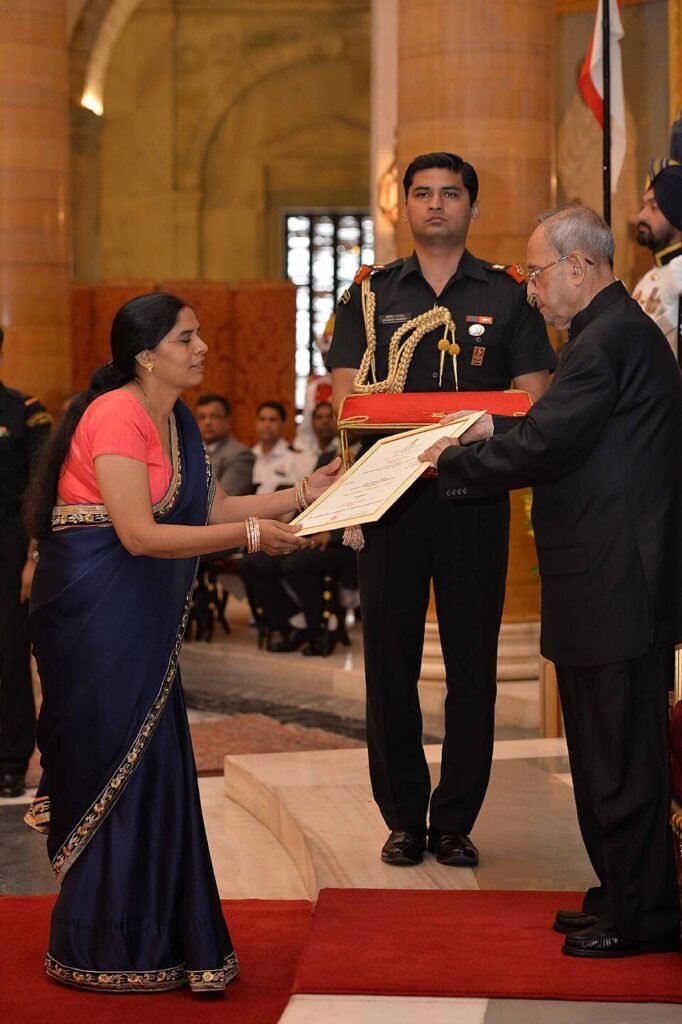
Who she is: A mother of three with no formal education who moved to Delhi with ₹500 and built a food brand with 100+ products and international reach.
When Krishna Yadav’s husband lost his job, the numbers were stark. Three children to raise. No formal education. No savings. No family network to absorb the crisis.
She moved to Delhi. She had ₹500 in her pocket.
Rather than looking for domestic work, the default path for millions of women in her position, Krishna sought out a skill. She enrolled in a pickle-making training course. When it ended, she went home and made her first batch. She sold jars on the roadside. She went door to door. People dismissed her. Some didn’t open the door at all.
She came back the next day.
Product by product, neighbourhood by neighbourhood, her brand grew. Shri Krishna Pickles now carries over 100 products and has reached international markets. Krishna went from roadside vendor to founder, not because someone invested in her, not because she had a business degree, but because she refused to interpret failure as a final answer.
Her children, who once watched their mother leave every morning with a basket of jars and a face full of quiet resolve, are now educated and supported by the business she built from scratch.
What she built: Shri Krishna Pickles, 100+ products, national and international distribution.
Sources: The Better India, Mother’s Day entrepreneurship coverage.
6. Subhasini Mistry — Hanspukur, West Bengal
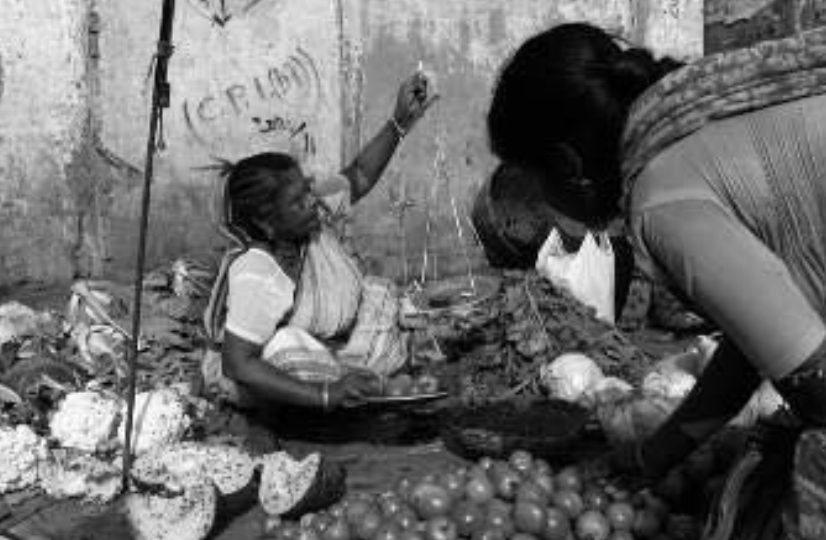
Who she is: A widow who worked as a maid and vegetable seller for 30 years, earning ₹1.25 a day, to build a free hospital for the poor. Padma Shri 2018.
Subhasini Mistry was born in 1943 into a family of 14 children in a village near Kolkata during the Bengal Famine. Seven of her siblings died in childhood. She was married at 12 to Sadhan Chandra Mistry, an agricultural worker who earned less than a rupee a day.
In 1971, her husband fell ill with a common, treatable ailment. The government hospital that was supposed to serve people like him demanded money and influence before it would help. The Mistry family had neither.
Her husband died of something that did not have to kill him.
Subhasini, 23 years old, was left with four children under five and nothing else. That night, grief-stricken and clear-eyed, she made a vow: she would build a hospital for the poor. She would make sure that no family would ever again lose someone the way she lost her husband.
“I never spent on myself. Whatever I earned, I saved most of it for the hospital. I don’t regret that I had to put two of my children in an orphanage. There were things that needed to be done for the greater good.” — Subhasini Mistry
What followed was 30 years of extreme physical labour. She worked as a housemaid, a vegetable seller, and a manual labourer, earning as little as ₹1.25 a day. She placed two of her four children in a children’s home because she could not afford to raise all four and save simultaneously. She poured every remaining resource into educating her youngest son, Ajoy, because her dream required a doctor.
Ajoy cleared the All India Medical Entrance Test in 1990 and graduated from Kolkata Medical College. In 1992, after three decades of saving, Subhasini bought one acre of land in Hanspukur. In 1993, the Humanity Trust was formed and a one-room clinic opened, staffed by volunteer doctors. On the very first day, 252 patients were treated.
That clinic became the Humanity Hospital: today a 45-bed facility spread over three acres, with full medical equipment, serving the poorest patients entirely free of charge.
In 2018, the Government of India awarded Subhasini the Padma Shri. She also received the Women Transforming India Award in 2017. Ajoy now runs the hospital his mother built. Subhasini, now in her eighties, still oversees its daily operations.
What she built: The Humanity Hospital, a 45-bed free hospital for the poor, built over 30 years on ₹1.25 a day.
Sources: Wikipedia (Subhasini Mistry); TheHealthSite.com; Aidbees Foundation; IANS reports; Vedantabharata.
7. Poonam Sharma — India
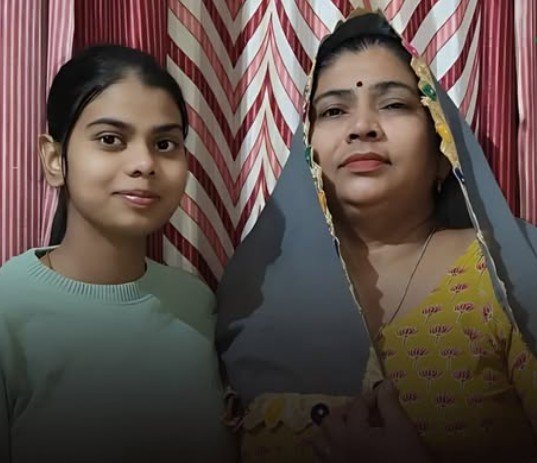
Who she is: A mother whose children were expelled from school over unpaid fees, and who responded by building a food business with 100+ products and international reach.
There was a specific day that Poonam Sharma still talks about. Her husband had lost his job. The school fees had not been paid. And then the school called.
She arrived to find her children’s bags packed at the gate. The message was clear: they could not return until the fees were settled. Poonam stood there, in front of her children, and wept.
“The day my children were asked to leave the school, I cried before them and felt miserable. It was so humiliating and disheartening for me.” — Poonam Sharma
Humiliation, when it lands on the right person, has a way of becoming fuel.
Poonam went home. She looked at what she had: a kitchen, her knowledge of Indian grains, particularly millets, and the stubborn conviction that she would not ask anyone for charity. She started making millet-based food products from home. Millets were beginning to attract attention as a nutritional powerhouse, and Poonam understood their value intuitively.
She experimented, refined, and slowly built a range of products. She sold at local markets. She reached out to distributors. She kept going even when nobody was watching.
Today her business carries over 100 products and has reached international markets. Her children, the same ones whose bags were packed at the school gate, are fully educated and thriving. Poonam walks, as she has said, with her head held high.
What she built: A millet-based food brand with 100+ products and global reach, launched from the worst day of her life.
Sources: The Better India, Mother’s Day entrepreneur coverage 2024–25.
What connects these seven women
They come from different states, different faiths, different circumstances. Mithu still takes the first train every morning. Sindhutai’s 1,500 children carry her work forward. Yangmila’s forest-sourced organic products ship to Mumbai and Delhi. Roshni speaks at the United Nations. Krishna’s pickles fill shelves internationally. Subhasini’s hospital treats the poor for free. Poonam’s millets reach kitchens across the world.
None of them set out to be inspiring. They set out to survive, to protect their children, to keep a promise they had made to themselves in a moment of devastation. The inspiration is a side effect of the stubbornness.
What connects them is not geography or language. It is something simpler and harder to name: a refusal to accept that their circumstances were final.
This Mother’s Day, and every day, they deserve to be known by name.
We are covering all seven of these women in our YouTube Shorts and Instagram Reels series. Search for each name to find their short-form story, or follow along for the full series. Every woman in this post is real, every detail is sourced, and every story is worth sharing.
If this post moved you , share it. One share might introduce someone to a name they’ll never forget.