
When Dr Anjlee Agarwal was 18, doctors told her she had limb-girdle muscular dystrophy. Most people would have seen this as the end of their dreams. She saw it as the beginning of her life’s work.
Today, at 30+ years into her career, Dr Agarwal is the reason millions of Indians can access buildings, schools, and public spaces they couldn’t before. Most of us talk about change and forget about it. But Dr Anjlee Agarwal actually became the change by being the architect of India’s accessibility standards.
Dr Anjlee Agarwal’s Wheelchair Showed Her the Way
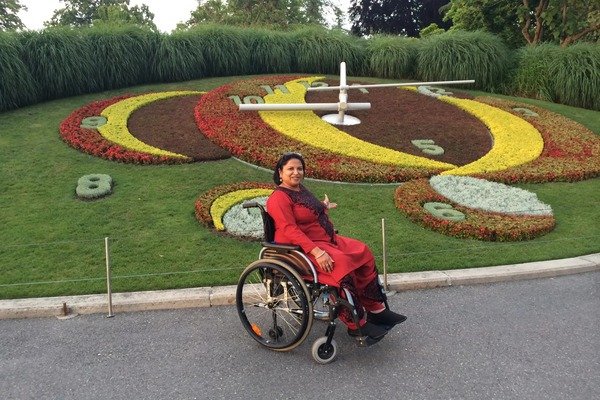
Dr Agarwal uses an assisted wheelchair. But that wheelchair took her places most of us will never go. She co-founded Samarthyam in 1991, an organization that now has consultative status with the United Nations.
She sits on NITI Aayog’s committee. And she wrote the National Building Code of India, 2016.
Think about that for a second.
The guidelines that determine how every new building in India is designed? She wrote them.
The “Harmonised Guidelines and Space Standards, 2016” for the Government of India? Also, her work.
She doesn’t believe in theory. She believes in practical
Dr Anjlee Agarwal doesn’t believe in theory. She walks into buildings with measuring tape and clipboards.
She trains engineers and architects. She audits pilgrimage sites, metro stations, and schools.
When she finds a problem, she not only points it out but also provides the solution, the cost estimate, and the implementation plan.
Her work covers:
- Access audits of public spaces
- Training programs for government officials
- Making schools accessible across India
- Designing accessible transportation systems
- Creating walkability audits for cities
- Developing inclusive tourism infrastructure
Someone Had to Think About Hand Sanitizer Heights
During COVID-19, while most of us were learning to use Zoom, Dr Agarwal created the ‘Covid 19 Action Collaborative.’
She made sure that the pandemic response included people with disabilities.
Because guess what?
When you’re designing hand sanitizer stations, someone needs to remember that not everyone can reach the standard height.
She’s also the first person in India to seriously include women and girls with disabilities in disaster management planning. Floods don’t care about accessibility. Earthquakes don’t wait for ramps.
Dr Agarwal made sure emergency protocols do.
Your Biggest Problem Might Be Your Best Qualification
Here’s what Dr. Agarwal proves: Your limitation might be your qualification.
She succeeded because of her disability. She understood what needed fixing because she lived it every day. That lived experience made her the best person to write national building codes.
You have something nobody else has. Maybe it’s your background. Maybe it’s a struggle you’ve faced. Maybe it’s a perspective others miss. That thing you think holds you back? It might be the exact reason you’re meant to do what you’re meant to do.
She Started in 1991, Before Email Was Even Common
Dr Agarwal started Samarthyam in 1991. The internet barely existed. Email wasn’t common. She was a young woman with a progressive disability in a field dominated by able-bodied men. She started anyway.
She didn’t wait for perfect conditions. She didn’t wait until she felt ready. She didn’t wait for someone to give her permission. She saw what needed doing, and she did it.
That’s the part nobody tells you about successful women. They started before they felt ready. They built expertise by doing the work, not by waiting until they had all the answers.
Her Method Is Surprisingly Simple
Dr Agarwal graduated from United Nations programs in 2000. She kept learning. She kept training. She took her expertise to the Asia-Pacific region. She built networks. She turned individual knowledge into institutional change.
Her approach is simple: See the problem. Learn the technical skills. Create the solution. Train others. Change the policy. Repeat.
No drama. No waiting for inspiration. Just consistent, targeted work that compounds over time.
Buildings Changed, So Did Lives
Because of Dr Anjlee Agarwal’s work, women with disabilities are now excelling in sports, commerce, and education. They’re visible in ways they weren’t before. They have access to schools, workplaces, and public spaces that previous generations couldn’t enter.
Making buildings accessible for the differently abled is not the only achievement she has.
She made careers possible. She made independence achievable. She made dignity non-negotiable.
What She Says About Labels
Dr Agarwal says: “Forget labels, forget barriers.”
She’s right. Whatever box you’ve been put in, whatever limitation someone told you defines you, forget it. Your job is to focus on the work that needs doing.
Maybe you can’t change national building codes. But you can start something. You can learn something. You can solve one problem for one person. And then another. And another.
You Don’t Need Permission to Begin
You don’t need a degree from the United Nations to start. Dr Agarwal got that after she’d already been working for years. You don’t need perfect circumstances. You need to identify one problem you can actually solve.
Dr Agarwal chose accessibility because she lived it. What do you live with every day that needs fixing? What do you understand better than other people because of your experience, not despite it?
Start there. Start small. Start messy. Start before you think you’re ready.
The women who change things aren’t special. They’re just the ones who started.
Where She Is Now
Dr Anjlee Agarwal continues her work through Samarthyam, Centre for Universal Accessibility. She’s active on social media, sharing updates about accessibility projects across India.
Her story isn’t finished. She’s still auditing, still training, still writing policy. At 30+ years into her career, she’s still building the accessible India she envisioned when she was 18.
You have time. You have the capability. You have something unique to offer.
The question is, will you start?
Here are some more inspiration to start working towards your dream career, goal of life, or purpose of life: