
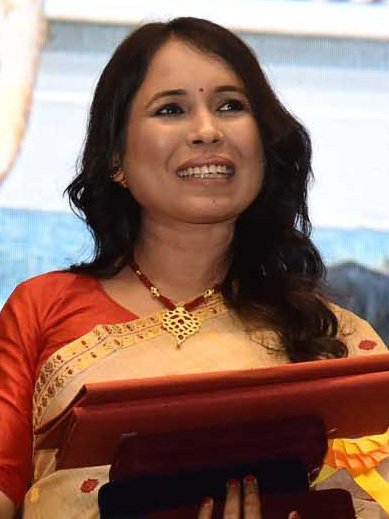
This Week, We’re Talking About Rima Das, and Why Her Story Might Be Exactly What You Needed to Hear Today
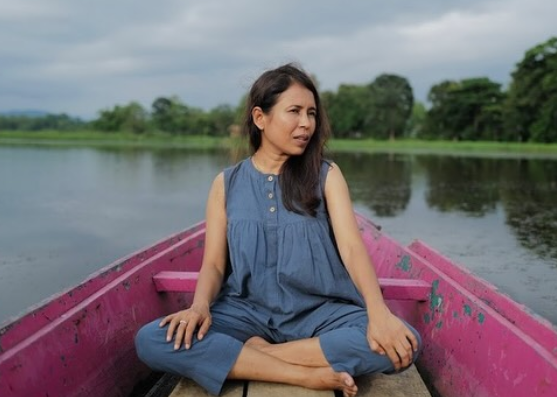
Hey you.
Yes, you, the one who has a dream living inside her but doesn’t know when to begin, how to begin, or whether she’s even “ready enough” to try.
Maybe you’ve been waiting for the right time. The right money. The right support. Maybe you’re telling yourself: when my kids are older, when things settle down, when I feel more confident. Maybe you know exactly what you want to do, but the thought of actually starting still scares the life out of you.
This week’s Women of the Week is for you.
Her name is Rima Das. She is an Assamese filmmaker who went to Mumbai with a dream, struggled for years, came home, picked up a DSLR camera, and made a film with village children that ended up representing India at the Academy Awards.
No film school. No producer. No Bollywood connections. No fancy crew. No marketing team. No hype.
Just a woman, a camera, her village, and a stubborn refusal to let her story go untold.
Let’s talk about her.
Table of Contents
Who Is Rima Das? Meet the Woman Who Changed Indian Cinema
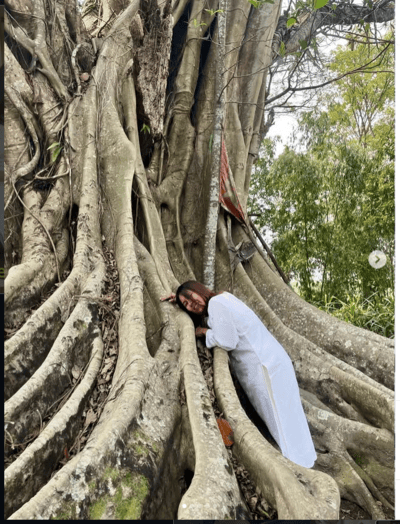
Rima Das was born in 1981 in Kalardiya, a small village near Chhaygaon in Assam — a place most of the world had never heard of, let alone seen on a cinema screen. She grew up playing by rivers, climbing trees, coming home muddy and happy, fuelled by a curiosity too big for her surroundings.
She never imagined films could be made — only watched. Becoming a filmmaker, she has said herself, was “never remotely on her radar.”
Today, Rima Das is a two-time National Award winner. She is the filmmaker whose debut film became the first Assamese film ever submitted for Oscar consideration. She is a member of the Academy of Motion Picture Arts and Sciences — the body that actually votes for the Oscars. She is the Brand Ambassador for TIFF’s Share Her Journey campaign, championing gender equity in cinema on one of the world’s most prestigious stages.
Her films have travelled to over 140 international film festivals and collected over 70 awards worldwide.
She didn’t just put Assam on the global map. She carved its name into the conversation.
And she built all of this — every single bit of it — herself.
What She Has Actually Achieved (Because the List Is Breathtaking)
Let’s just pause and sit with this for a moment. Remember: this is a woman who started with nothing but a DSLR and a village full of stories.
National Award for Best Film
Her film Village Rockstars (2017) won India’s National Award for Best Film — one of the country’s highest honours in cinema. She also won National Award for Best Editing for the same film. It was a historic moment for Assamese cinema.
India’s Official Oscar Entry
Out of 28 competing entries, Village Rockstars was chosen to represent India at the Academy Awards in 2019. It was the first Assamese film in history to be submitted for Oscar consideration.
TIFF, Busan, and Berlinale
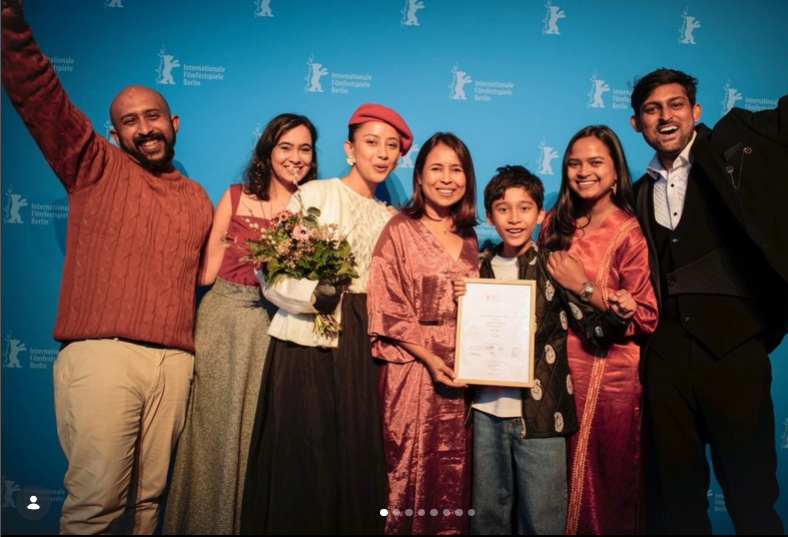
Multiple of her films have premiered at the Toronto International Film Festival, the Busan International Film Festival, and the Berlin International Film Festival — considered among the most respected stages in world cinema.
GQ Most Influential Indian
In 2018, she was named one of the 50 Most Influential Young Indians by GQ India — a list that placed her alongside some of the country’s biggest names.
Academy of Motion Picture Arts and Sciences
In 2024, she was inducted into the Academy’s Directors Branch — the voting body that decides the Oscars. This is the institution that recognises the world’s finest filmmakers. She is in it. (Source: APSA)
Kim Jiseok Award, Busan 2024
Her most recent film, Village Rockstars 2, won the prestigious Kim Jiseok Award at the Busan International Film Festival before its European premiere at Berlinale 2025.
She has also served as a jury member at the Berlin International Film Festival, Tallinn Black Nights Film Festival, and the Mumbai International Film Festival. She received an honorary doctorate from Krishna Kanta Handiqui State Open University in Assam. (Source: Sentinel Assam)
“I felt a sense of liberation that nothing else had ever given me. It felt beautiful. I was happy because I had the freedom to create what I wanted to create. And that freedom, I think, came from my personal struggles.” — Rima Das, The Week, 2025
But First: The Walls She Had to Walk Through
Here’s what the awards don’t show you: the years before the spotlight.
And Rima Das had many of those years.
She went to Mumbai to become an actor — and it broke her.
After completing her Masters in Sociology and clearing the National Eligibility Test (NET), she moved to Mumbai with dreams of being on screen. She was good. She had excelled in acting during school and college in Assam. But Mumbai was a different world.
What she found there was a world where her looks, her language, her background, everything felt like a barrier. She struggled for years. The dream she had nurtured felt further and further away with each passing day.
She has spoken openly about how the circumstances pushed her into depression. Let that sink in. The woman who would later take Assam to the Oscars first sat in a Mumbai apartment — invisible, defeated, and quietly falling apart.
Being a woman filmmaker came with its own specific obstacles.
Even after she found her calling, the challenges didn’t disappear, they just changed shape. She has spoken candidly about how safety is a barrier that male filmmakers simply don’t face.
“If I want to do research or shoot something in the middle of the night, I am dependent on someone from my family or crew who is male.”
That fear of being a woman alone at night, in unfamiliar places, doing her job is something she has carried from childhood. It is still something she navigates today. (Source: The Week, 2025)
There was no money, no crew, and no guarantee.
When she finally started making her first feature film, Village Rockstars, she had no external funding and no producer. She financed it herself. She wrote it, directed it, produced it, shot it, edited it, and handled production design, all on her own.
The film took three and a half years and 130 shooting days to complete. She shot in the blazing Assam summer. She shot through floods. She shot through power cuts. She worked with children who attended school and sometimes simply didn’t show up on set.
It cost her enormous energy. It tested every inch of her sanity. And she kept going anyway.
Regional cinema itself was an uphill battle.
Beyond her personal struggles, she was also fighting a system that didn’t naturally make room for stories like hers, in a language like hers, from a place like hers.
As she has said: “The stereotype of regional films being less significant than Bollywood is slowly breaking, but much more needs to be done.” (Source: Assam Info)
How She Turned It All Around
The turning point came when Rima Das stopped chasing someone else’s version of success and went home.
She found world cinema in the middle of her struggle.
While things were falling apart in Mumbai, something unexpected was also quietly growing. She started attending film festivals: the Mumbai Film Festival, IFFI in Goa. She discovered the films of Satyajit Ray, Ingmar Bergman, Majid Majidi. A small fire began to burn. She started thinking: maybe I can make films too. Even with what little I have. (Source: The Better India)
She taught herself. She read articles. She watched and re-watched films. She absorbed everything she could. And it was not from a classroom, but from curiosity and sheer will.
She went back to Assam — and found everything she needed.
When she returned to her village, she saw a group of children at a local gathering, playing fake instruments with wild, unapologetic joy. Something clicked. She told them she wanted to make a film with them. They never stopped following her after that.
That became Village Rockstars.
“I didn’t have the confidence or courage to find a producer, so I used my own camera and began filming what felt like a painting — a visual story that connected me to my roots.” — Rima Das, SheThePeople, 2025
She wrote it. Directed it. Produced it. Shot it. Edited it. Did the production design. Cast her own cousin in the lead role. Fought through floods, heat, power cuts, and self-doubt.
She has said: “
It drained all of my energy, but none of my courage.
She didn’t wait to stop being afraid. She moved forward anyway.
The language barrier that once silenced her in Mumbai? She tackled it by learning Hindi and eventually Marathi. After becoming a director, she later said: “I don’t have that phobia anymore. I can speak freely.”
She didn’t wait to be fearless. She moved forward while being afraid.
That is the whole lesson, right there.
What Rima’s Journey Is Actually Teaching You
Okay. Let’s talk directly to you now.
If you’ve been sitting with a dream that feels too big, too fragile, or too uncertain — here are the lessons from Rima Das’s journey that we want you to hold close. Really close.
Lesson 1: Your “failure detour” might actually be your real path.
Rima went to Mumbai to be an actor. It didn’t work out. That “failure” is what led her to discover world cinema — and ultimately find filmmaking. What looks like a dead end might actually be a redirect. Don’t be so afraid of things going sideways. Sometimes the plan you didn’t make is the better one.
Lesson 2: You don’t need a degree. You need to start.
Rima never went to film school. She learned by watching, reading, observing, and doing. The doing is the training. You don’t need to be “qualified” before you begin. You get qualified by beginning. Whatever it is you want to do — find one small way to start it today. Just one.
Lesson 3: Your roots are your power, not your limitation.
The world kept suggesting Rima needed to be somewhere more “important.” But her greatest work came when she went back to her village, her people, her language. What you know, where you come from, who you are that is your material. Don’t let anyone convince you that your story is too small or too local to matter. It isn’t.
Lesson 4: Work with what you have. Seriously, right now.
Village Rockstars was made with a Canon DSLR, village children, natural lighting, and almost no budget. It went to the Oscars. The “right time” and the “right resources” are myths most of us tell ourselves so we don’t have to start yet. Rima shot through floods and power cuts. She didn’t wait for perfect conditions — she made something beautiful inside imperfect ones.
Lesson 5: Stubbornness in service of your vision is not a flaw — it’s a requirement.
She once shot the same scene for ten days to get it right. She refused to bring in external producers because she knew it would compromise her creative freedom. Being “difficult” about your standards isn’t something to apologise for. It’s how great work gets made.
Lesson 6: Courage is not the absence of fear. It’s showing up anyway.
Rima experienced depression. She felt fear. She doubted herself deeply. And she still picked up the camera. You are not supposed to feel confident before you begin. You feel confident because you began. That is the sequence. She proved it.
Lesson 7: Patience is not passive — it’s disciplined faith.
Three and a half years. One hundred and thirty shooting days. That’s how long Village Rockstars took. Big things take time, and that’s not a warning, it’s a promise. If Rima had put the camera down at year two because “it’s taking too long,” the Oscars would never have received that film. Keep going.
Your Story Deserves to Be Told. Go Tell It.
Rima Das didn’t wait until she was ready. She wasn’t sure it would work. She had no map, no guarantee, no safety net, no producer, no film school, no industry contacts.
She had a camera. A village. And the belief that her stories mattered.
She was right.
So are yours.
Sources: Wikipedia | IMDb | The Better India | The Hollywood Reporter | The Week | SheThePeople | Sentinel Assam | Assam Info | APSA
Want more doses of inspirations. Here are they: