
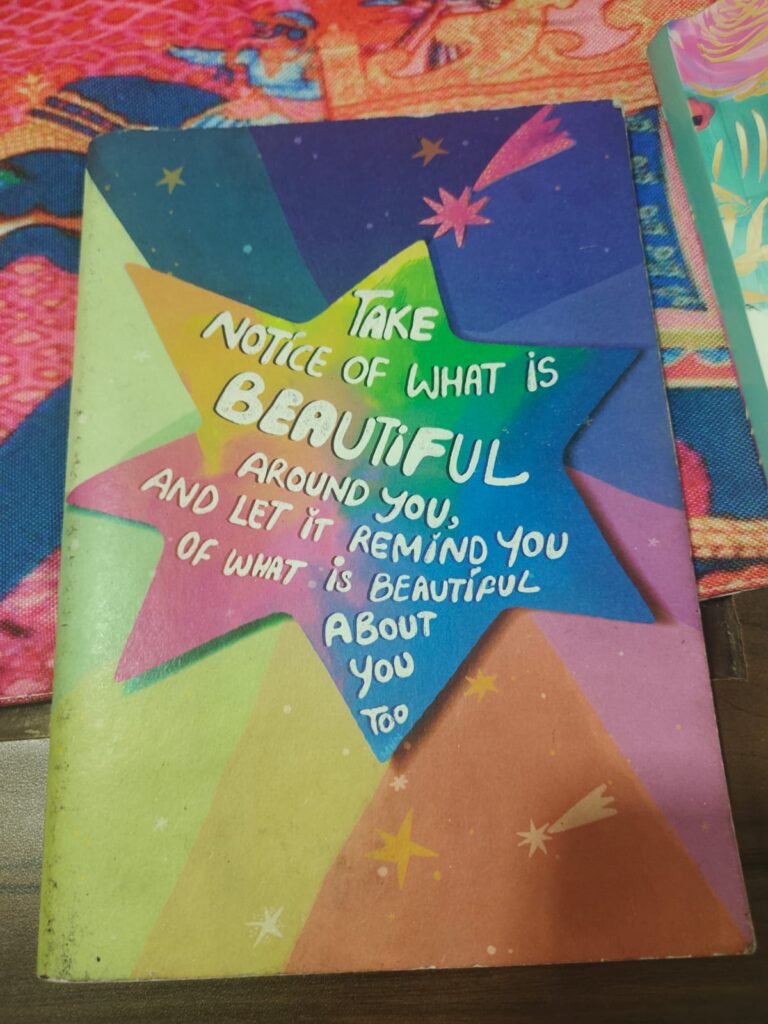

A few years ago, my life felt like it was slowly coming undone.
I was heartbroken due to personal issues and struggling with depression. Around the same time, my brother slipped into a coma. My elderly parents were taking care of him, and the weight of the situation pressed down on all of us. Days felt heavy, and nights were even darker. Everything felt uncertain.
Morning journaling helped me survive that dark phase.
I read blogs and articles and watched videos about how to cope with depression and anxiety and one of the videos were about morning journaling.
Here’s one of the videoes I watched:
Another one:
There was a funfair in our society and I saw a lady selling colorful journals. I picked up one and that’s the beginning of my morning journaling journey.
Table of Contents
The Small Habits That Kept Me Going
My mind was always racing with thoughts. Some negative and some hopeful. I began walking every day. I added yoga to my routine. And almost unintentionally, I started maintaining a gratitude journal.
At first, morning journaling wasn’t about productivity or self-improvement. It was about survival. Writing down what I was grateful for each day gave me something steady to return to when everything else felt unstable.
Slowly, it helped me concentrate again—on my job, on personal projects, and on showing up for my family. Journaling gave me a sense of order when my thoughts were scattered and my emotions overwhelming.
Finding Strength Through Morning Journaling
Every day, I wrote down five things I was grateful for. Some days they were small. Some days repetitive. But the act itself mattered.
Gratitude journaling didn’t erase my pain or fix the situation. What it did was help me stay strong enough to face it. As I gathered my mental and physical strength, I was able to help my family find courage too—to keep going, one day at a time.
That’s when I realized journaling wasn’t just helping me cope. It was shaping me into a more disciplined and resilient person.
What to Write in a Journal
Two years later, journaling is no longer something I turn to only in difficult times. It’s a part of my everyday life.
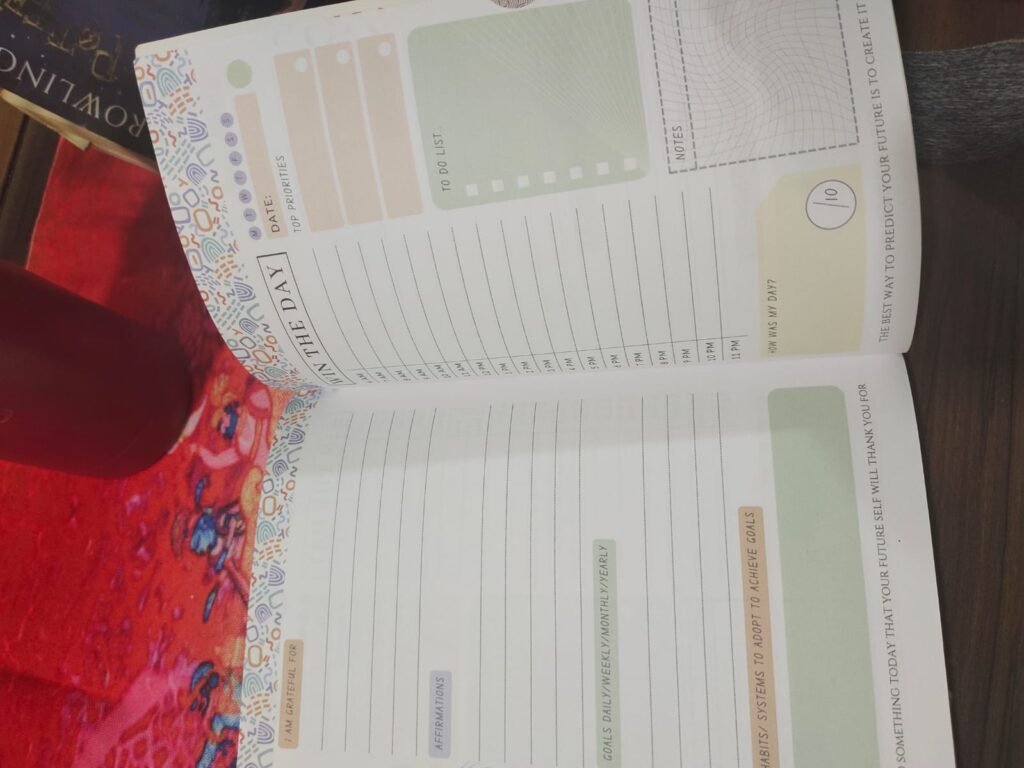
I started with a graphic journal that gave my thoughts structure. It wasn’t just blank pages, it had sections that guided me:
- Five things I am grateful for
- Five manifestations
- Tasks planned from morning to night
- Notes and reflections
- A doodle corner
- Priorities for the day
This structure helped me stay focused and intentional. Writing things down made me more aware of how I spent my time and energy. Even when I didn’t complete everything, I stayed conscious of what mattered.
Now I am planning to use a blank journal instead of a structured one as I want more freedom to express myself.
If you are clueless about what to write in a journal you can do the same: start with a structured one then move to a blank journal.
What Is Gratitude Journaling?
Gratitude journaling is the practice of writing down things you’re thankful for on a regular basis. But gratitude journaling doesn’t mean forced positivity or pretending everything is fine. While you gratitude journa, you pause long enough to notice what’s still holding you together.
In my case, it was my family, loved ones, and my besties.
In my journal, I write five things I’m grateful for every day. Some days they’re big. Most days they’re ordinary. But the act of writing them down shifts my attention away from what’s overwhelming and back to what’s steady.
It helps me stay mentally present. It didn’t remove the pain or uncertainty that my family crisis created, but it gave me enough clarity to keep going, show up for my work, and support my family.
Over time, this simple habit became a way to build resilience. Gratitude journaling trained me to look for strength instead of spiraling into negativity — and that’s why it remains a core part of my morning journaling habit.
What Is Bullet Journaling (BuJo)?
Bullet journaling, also called BuJo, is a flexible journaling system that combines planning, reflection, and tracking in one place. Instead of separate notebooks for to-do lists, thoughts, and goals, everything lives on a single set of pages.
For me, bullet journaling made sense because I needed structure without rigidity. I wasn’t looking for perfection or aesthetic spreads — I needed a system that helped me stay organized and mentally clear.
My bullet journal includes sections for daily tasks from morning to night, priorities, notes, and space to reflect. Over time, I added elements like gratitude lists, manifestations, and even a small doodle corner. This balance of structure and flexibility helped journaling become a habit rather than another thing to maintain.
Bullet journaling works because it adapts to real life. Some days the pages are neat and intentional. Other days they’re messy and functional. Both are valid. What matters is that the journal reflects what’s actually happening, not what it’s supposed to look like.
Art Journaling and Creative Journaling
Art journaling, also known as creative journaling or artjournaling, is a more visual and expressive form of journaling. It blends writing with drawing, doodling, and free-form creativity. There are no rules, no templates, and no pressure to make it look a certain way.
My first journal had a dedicated corner for art. That space mattered more than I realized at the time. It gave me permission to pause, sketch, doodle, or simply let my thoughts spill onto the page without needing words.
My current journal doesn’t have that section, and I’ve felt its absence. That’s why I’m planning to move to a blank journal next — one I can customize fully for art journaling, bullet journaling, and gratitude journaling, all in one place.
Creative journaling has always helped me process emotions quietly, especially during heavy periods when writing alone wasn’t enough. A line, a shape, or a rough sketch often said what words couldn’t.
What Journaling Gave Me
Do not think about journaling as some magic. It isn’t hocus focus. But it changed how I responded to adverse situations and life’s challenges.
It helped me become more disciplined. More grounded. Stronger, mentally and emotionally. It gave me clarity during chaos and consistency when everything else felt unpredictable.
Today, I still journal every morning. And when I don’t, I feel it. Something feels incomplete.
For me, journaling isn’t a trend or a productivity hack. It’s a practice that helped me survive a difficult chapter, and continues to help me live with intention.